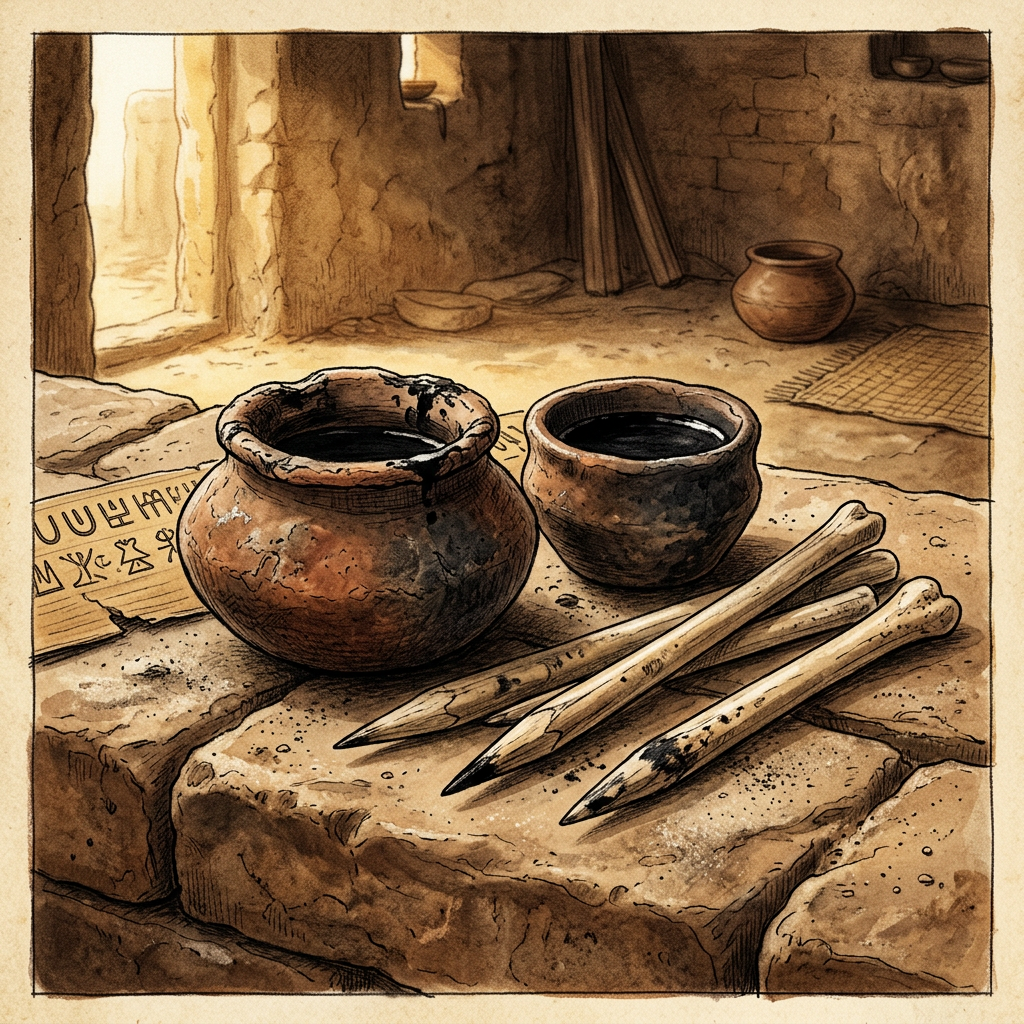
Archaeologists at the ancient port city of Lothal in Gujarat have identified a rare structure believed to be the residence and workshop of a high-ranking Indus Valley scribe. The excavation revealed a small, well-ventilated chamber containing several unfired clay tablets, distinctive pointed bone styluses, and the first recorded examples of terracotta ink-wells still containing traces of carbon-based pigment.
This discovery provides unprecedented insight into the literacy and record-keeping practices of the Harappan civilization. Unlike previous finds of seals in administrative centers, this residential context suggests that scribal duties were a specialized professional class that operated within dedicated domestic spaces. The presence of unfinished seals alongside the writing tools indicates that scribes may have also been involved in the precision engraving of the famous Indus script.