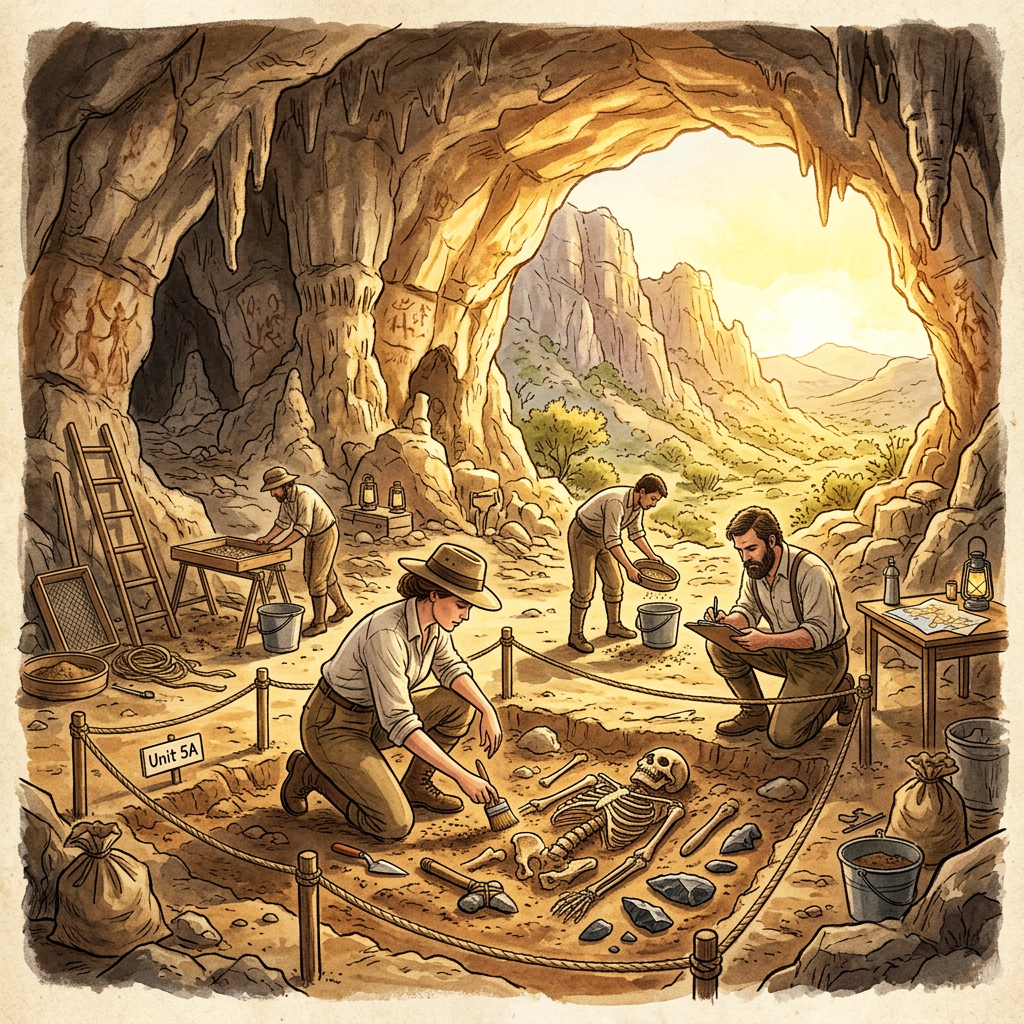
Scientists have sequenced the first high-coverage genomes from 7,000-year-old human remains found in the Vindhya Range, uncovering a unique genetic lineage that remained isolated for millennia. The study, published in Paleogenomics Today, provides critical evidence of how early hunter-gatherer populations adapted to the subtropical ecosystems of Central India long before the advent of large-scale agriculture.
The research identifies specific genetic markers associated with resistance to endemic forest pathogens and highlights the deep ancestral roots of modern tribal communities in the region. This breakthrough challenges existing models of migration by suggesting that certain Holocene populations in the Indian interior maintained distinct genetic identities despite the surrounding expansion of Neolithic farming groups.