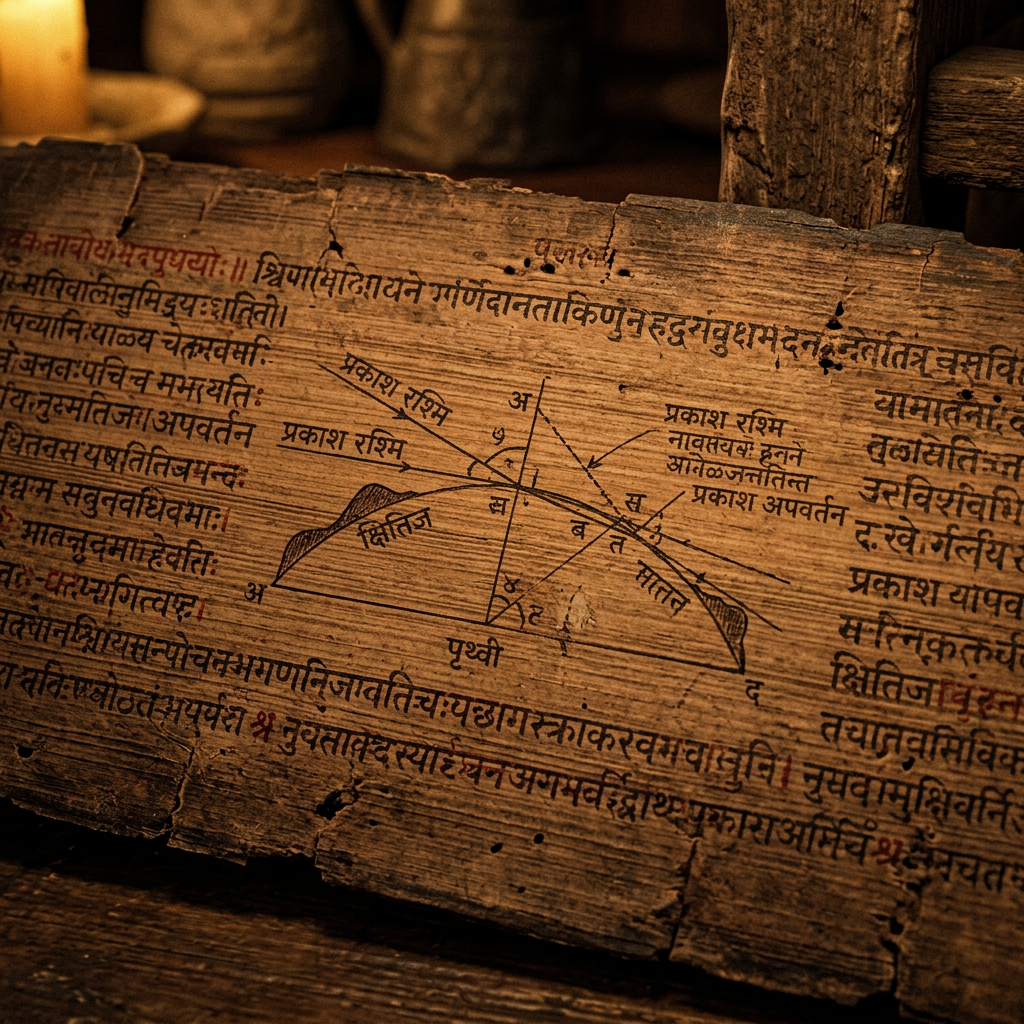
A new study has analyzed recently digitized palm-leaf manuscripts from the Bhaskara school of astronomy, revealing sophisticated recursive algorithms used to calculate light refraction near the horizon. These 11th-century documents suggest that ancient Indian scholars utilized complex iterative series to correct planetary position measurements, showing a high level of mathematical foresight.
The research, appearing in the Academic Heritage Review, demonstrates that these scholars understood the variable density of the atmosphere and its impact on celestial observation. By applying modern computational modeling to these ancient formulas, researchers found they provide results with a degree of precision that was not seen in Western astronomy until the late Renaissance.