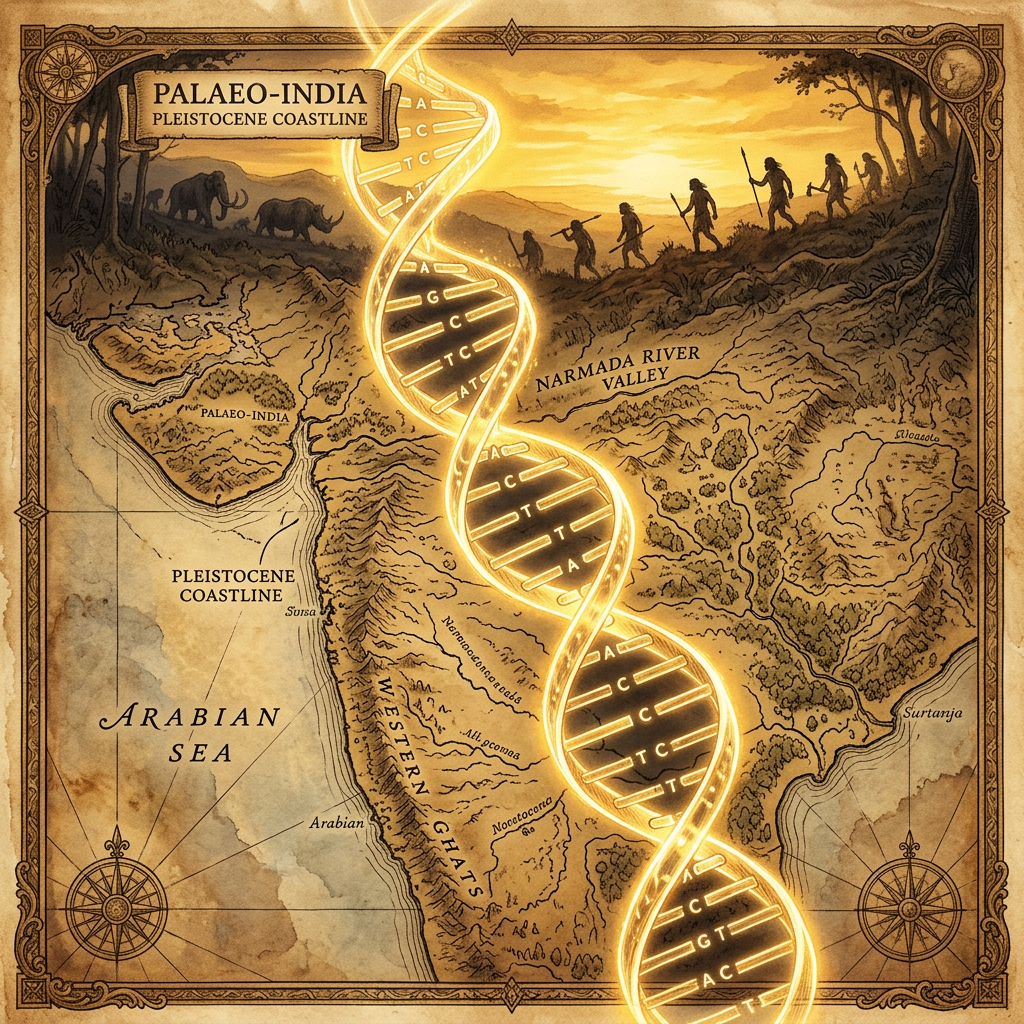
A groundbreaking genomic study of Pleistocene-era remains discovered in the Cauvery Basin has identified a previously unknown human lineage that split from the main South Asian group over 40,000 years ago. Published in the Scientific Anthropology Journal, the study suggests that the southern peninsula served as a significant refugium during the Last Glacial Maximum.
This 'ghost lineage' appears to have contributed significantly to the genetic makeup of contemporary coastal populations in South India. The findings provide a new understanding of Pleistocene human dispersal and indicate that South Asia's genetic history is far more complex and geographically diverse than earlier migration theories suggested.