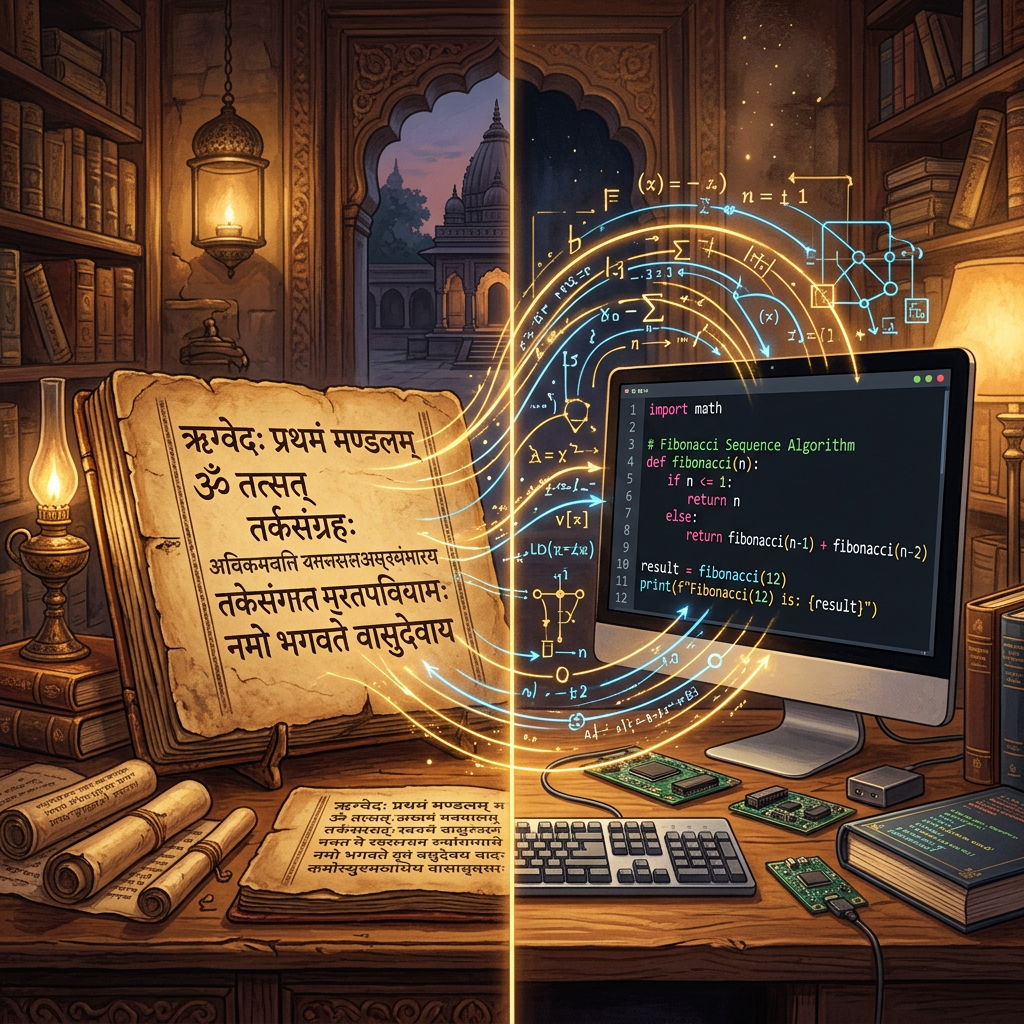
Research into 4th-century commentaries on Sanskrit grammar has uncovered the use of formal logic structures that mirror modern machine-translation algorithms. A team of linguists and computer scientists analyzed the syntactic rules of Patanjali's work and found a sophisticated framework for semantic mapping and recursive transformation.
The study, published in Computational Linguistics Quarterly, argues that the foundational logic of Sanskrit grammar was designed for high-precision communication and data processing. These findings suggest that ancient grammarians were effectively the world's first software architects, developing a language system optimized for structural consistency and algorithmic manipulation.