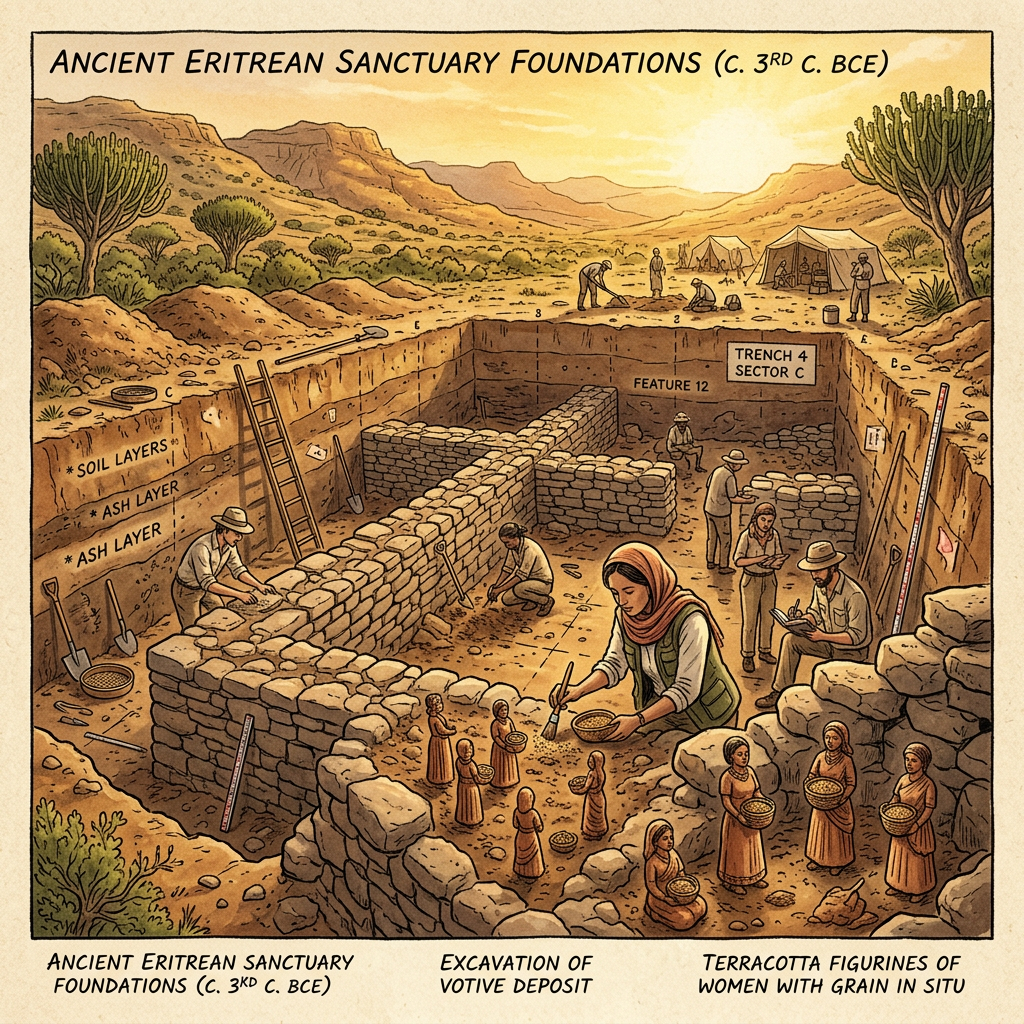
A joint expedition in the Gash-Barka region of Eritrea has uncovered the foundations of a monumental sanctuary dating to the 8th century BCE. The site contains a series of unique terracotta figurines depicting women holding bundles of barley and wheat, often accompanied by percussive clay instruments. Archaeologists believe this site served as the primary ritual center for a prehistoric harvest festival that later evolved into the Aksumite celebrations of seasonal abundance.
The excavation revealed a specialized "acoustic chamber" within the sanctuary, designed to amplify the rhythmic chanting of ritual performers. Researchers suggest that the lyrical patterns found in modern Tigre and Tigrinya harvest songs may have phonetic roots in the ceremonies performed at this site. This discovery highlights the long-term cultural continuity of agricultural rituals in the Horn of Africa, bridging the gap between early sedentary societies and later imperial traditions.