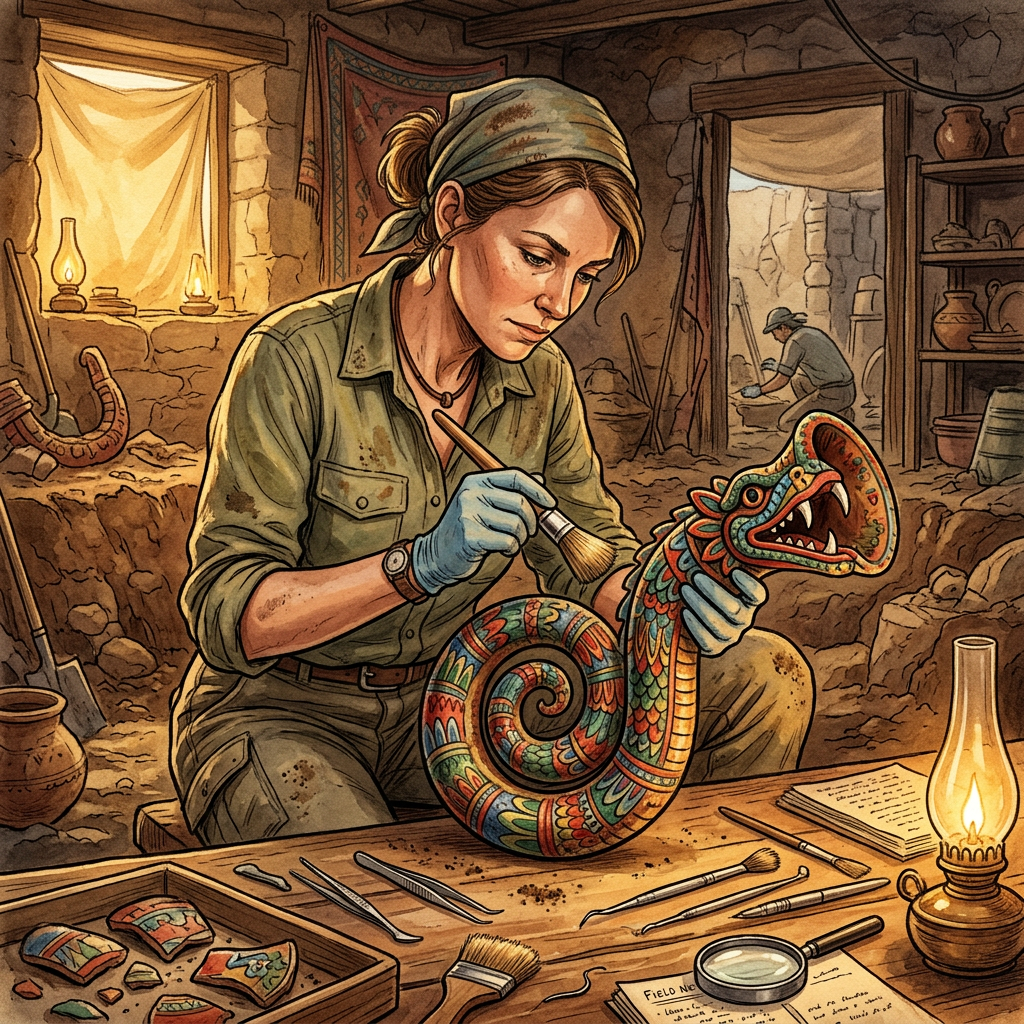
During excavations in the Diquis Delta of Costa Rica, researchers have discovered a set of five ceramic trumpets shaped like the undulating bodies of feathered serpents. The instruments, dating to approximately 800 CE, are painted with vivid mineral pigments and feature mouthpiece designs that alter the sound to mimic the roar of a jaguar. Contextual evidence suggests these were used during masked communal dances that were precursors to the Boruca people's 'Baile de los Diablitos' (Dance of the Little Devils).
This discovery provides critical insight into the musical landscape of pre-Columbian Central America. The trumpets were found in a ceremonial plaza alongside stone spheres, indicating that the music was part of a larger, cosmologically-aligned festival cycle. This find emphasizes the deep temporal roots of Costa Rican indigenous performance art and its role in maintaining communal identity through centuries of environmental and social change.