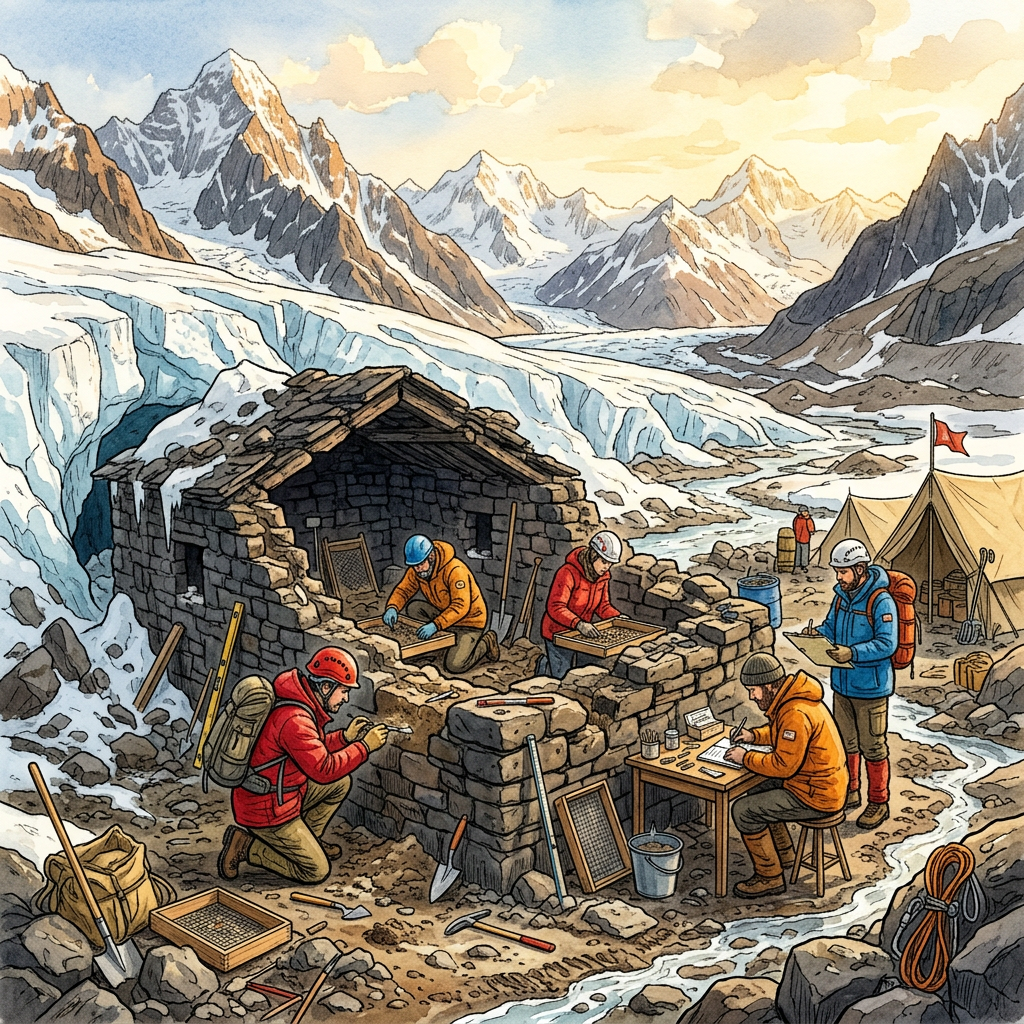
As temperatures rise in the Karakoram Range, retreating glaciers have exposed the remarkably preserved remains of Kushan-era waystations at altitudes exceeding 4,500 meters. These stone-built shelters provided vital refuge for traders navigating the most perilous sections of the Silk Road. Inside the structures, archaeologists discovered organic materials—including wool textiles, leather boots, and even dried apricots—that have been frozen for nearly 1,800 years.
The find provides the first direct evidence of the seasonal logistics required to move luxury goods like silk and spices across the high mountain passes during the peak of the Kushan Empire. The presence of Chinese coins alongside Roman glassware in these remote shelters highlights the truly global nature of this ancient trans-continental network. Researchers are racing to document these sites before the newly exposed organic materials decay in the warming air.