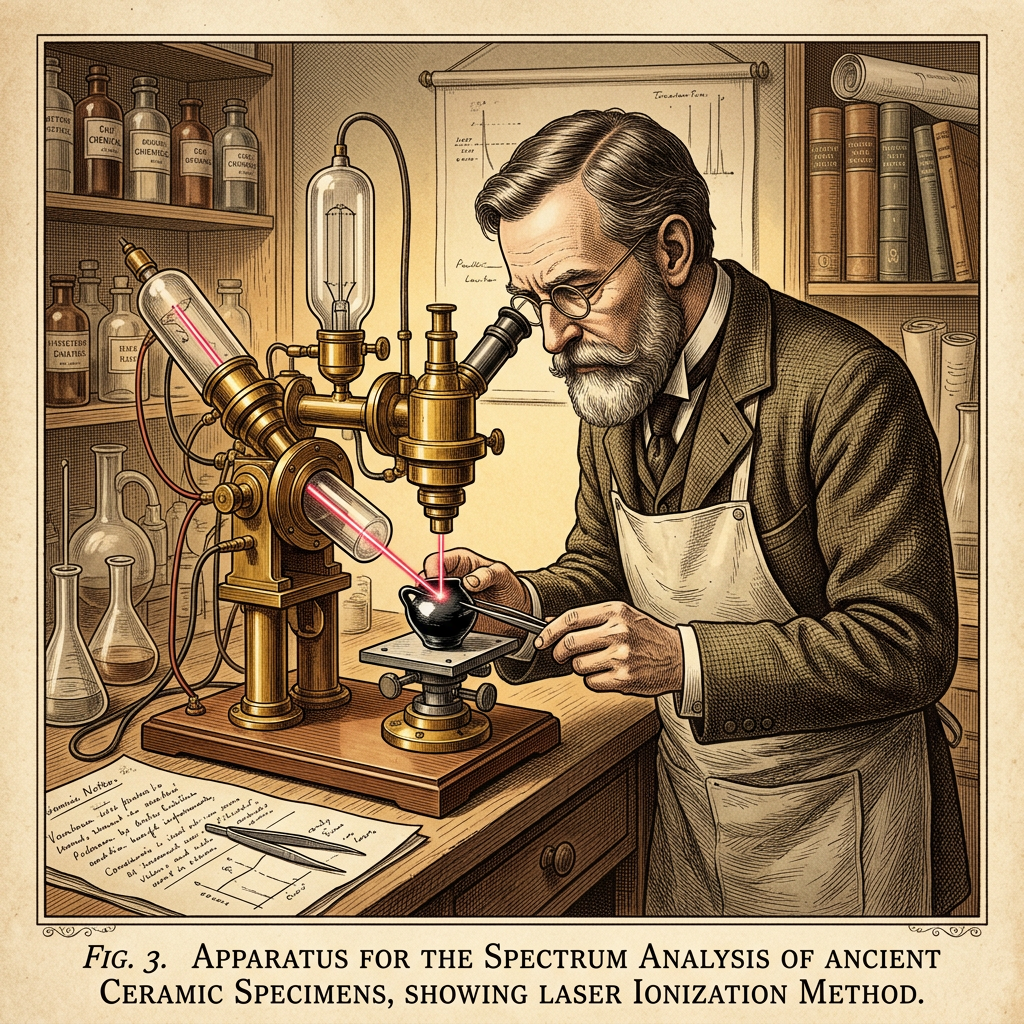
A new dating methodology involving Helium-4 diffusion in zircon micro-crystals has been successfully applied to Northern Black Polished Ware (NBPW) excavated from Rajgir. The study, published in Archaeometry, provides a significantly more refined timeline than traditional radiocarbon dating of associated charcoal. The results place the emergence of this sophisticated ceramic technology as early as 800 BCE, nearly two centuries earlier than previously established.
This shift in chronology has profound implications for the study of the "Second Urbanization" in India, suggesting that the development of specialized craft guilds and long-distance trade networks in the Gangetic Plain began much sooner. The precision of the Helium-diffusion technique allows researchers to distinguish between individual kiln firings, providing a seasonal resolution for the growth of ancient Pataliputra.