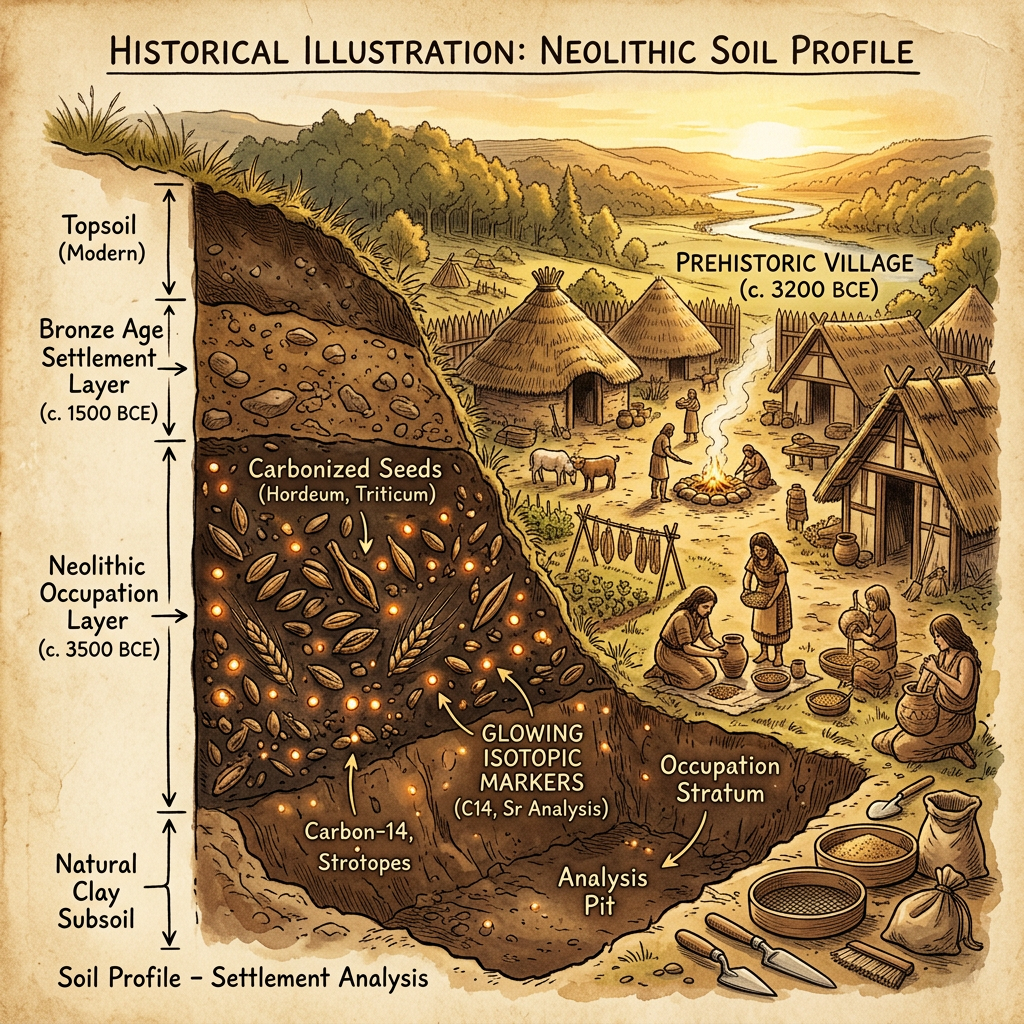
A new study in the Journal of Archaeological Science utilizes advanced Nitrogen-15 isotopic calibration to analyze the diet of Neolithic settlers in the Middle Son Valley. The data reveals that around 6000 BCE, there was a sudden and systematic increase in the consumption of high-protein pulses, specifically horse gram and green gram. This shift suggests a managed dietary transition that likely supported a significant population boom.
The isotopic signatures indicate that these pulses were grown in nitrogen-enriched soils, implying that early farmers in central India were practicing deliberate soil management through animal manuring or intercropping. This research provides the earliest chemical evidence of specialized legume cultivation as a staple food source, fundamentally changing our understanding of the nutritional foundations of early South Asian village life.