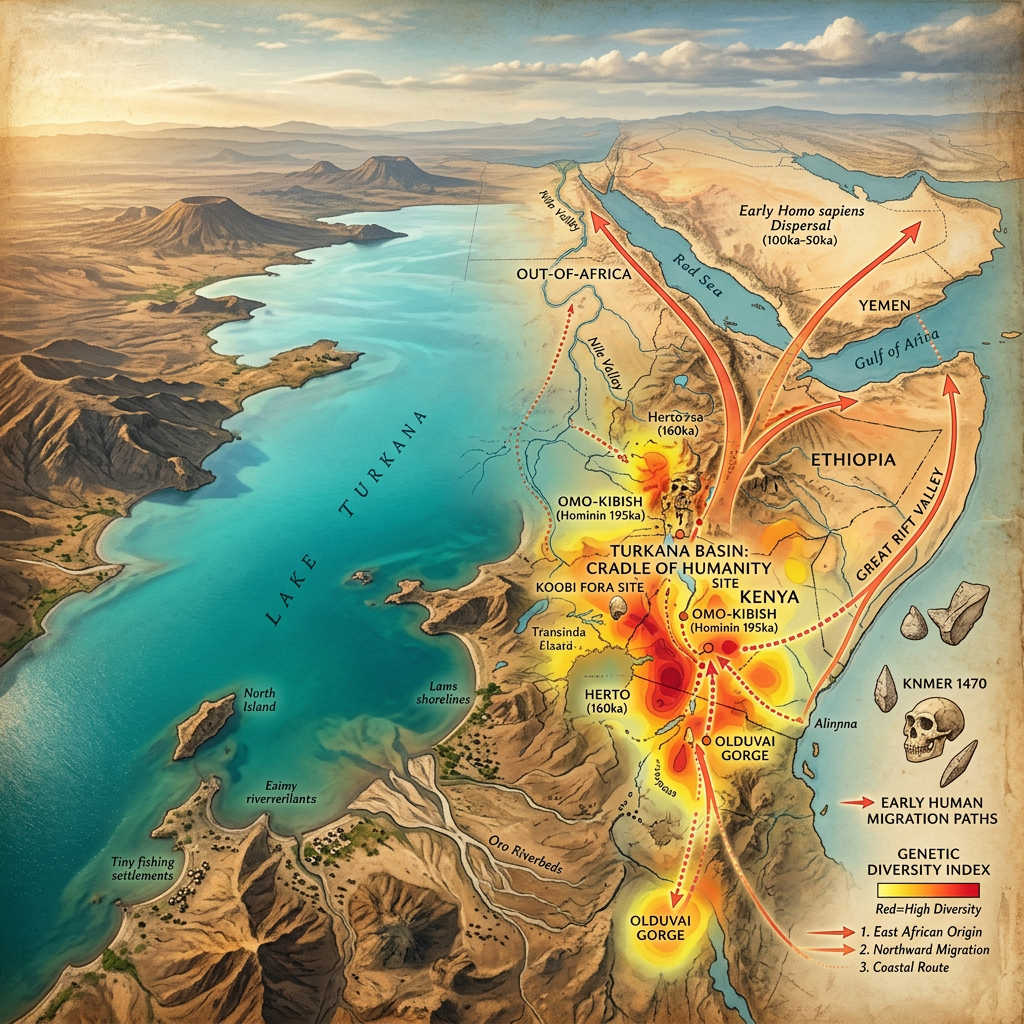
Research published this week in Nature Communications details the genomic analysis of remains from the Lake Turkana basin in Kenya. The study identifies a major genetic split occurring approximately 7,500 years ago, marking the emergence of the lineage that would become the modern Nilotic-speaking pastoralists. This research provides the first direct evidence of genetic selection for long-distance endurance and specific lipid metabolism linked to milk consumption in East Africa.
The study also found traces of genetic admixture from an unknown "ghost" population that inhabited the Sahara during its last green phase. This interbreeding event likely introduced crucial adaptive alleles that allowed early pastoralists to thrive in the fluctuating environments of the Rift Valley, mapping the transition from foraging to specialized cattle herding with unprecedented clarity.