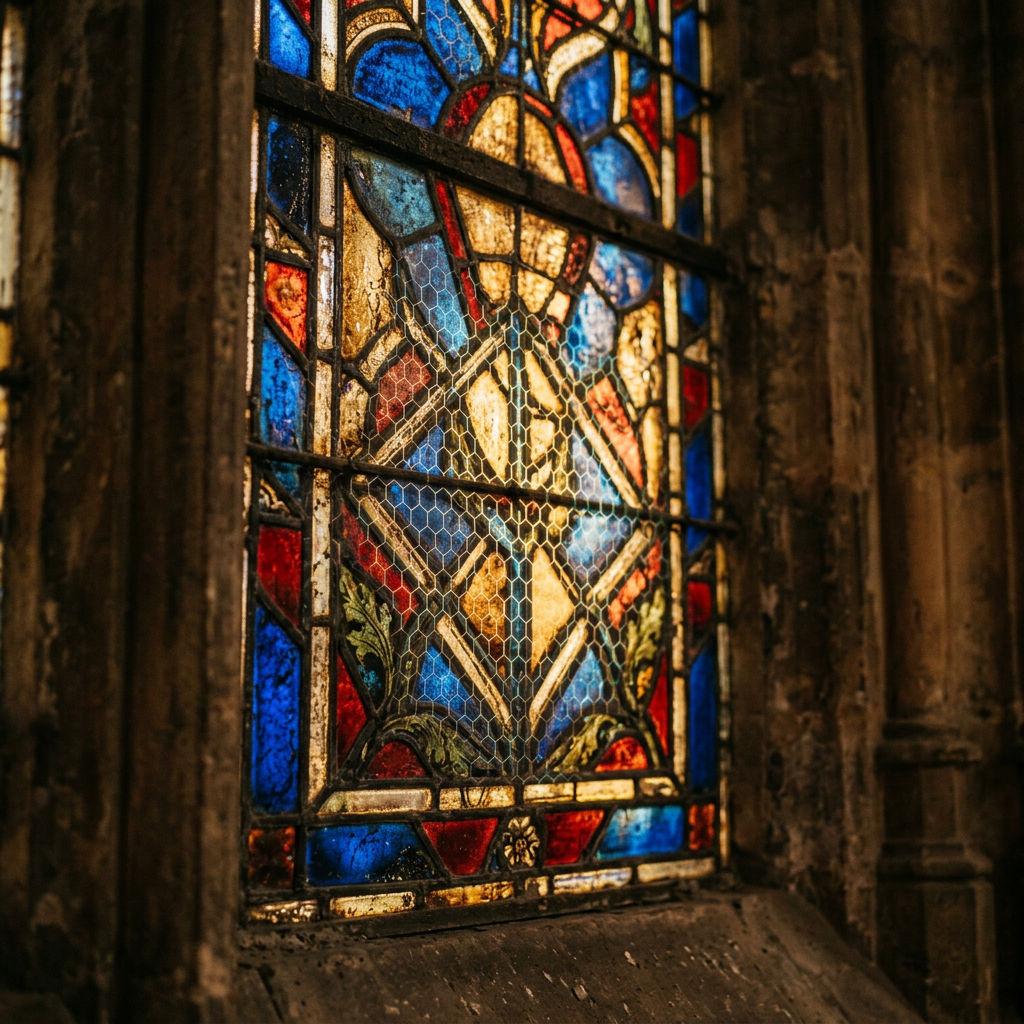
A breakthrough in materials science is being deployed to save Europe’s crumbling medieval cathedrals. Scientists have developed a graphene-based nano-filter that can be applied as an invisible, breathable layer over ancient stained glass. This technology prevents the corrosive effects of acid rain and industrial pollutants while allowing the glass to expand and contract naturally with temperature changes.
Initial trials at the Cologne Cathedral in Germany and York Minster in the UK have shown a 95% reduction in the rate of chemical weathering. Unlike traditional resins, which can yellow or trap moisture, the atomic-scale graphene lattice is completely transparent and allows harmful gases to escape from the glass's surface, preventing internal fractures.
This 'smart coating' also includes UV-filtering properties that protect the delicate medieval pigments—such as silver stain and copper oxide—from fading. Conservationists hail this as the most significant advancement in glass preservation in the last fifty years, offering a permanent solution for thousands of historic windows across the continent.