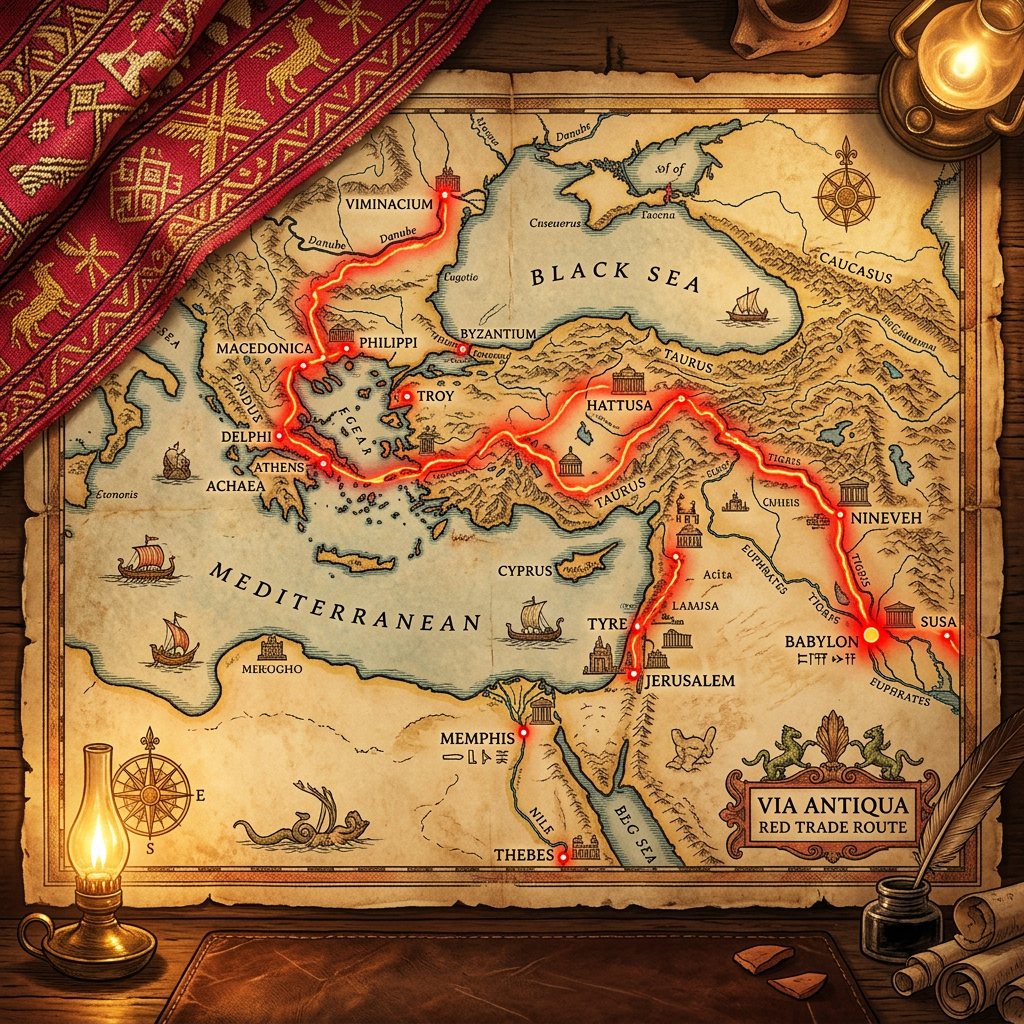
A multinational research team has uncovered evidence of a previously unknown 1,000-mile trade network dubbed the 'Madder Dye Road.' By using advanced liquid chromatography-mass spectrometry on textile fragments found in Iron Age burials, scientists have traced the specific chemical signature of Rubia tinctorum—the madder plant—from the volcanic soils of Central Turkey to the Thracian tombs of modern-day Bulgaria and Romania.
This discovery suggests that high-quality red textiles were not just local products but were part of a sophisticated intercontinental luxury trade that existed centuries before the formalization of the Silk Road. The research highlights the strategic importance of early dye-production centers as economic hubs that facilitated the exchange of technological knowledge between the Near East and the Balkans.
The study also revealed that the trade was accompanied by the movement of specialized weaving tools and loom weights, indicating that entire artisanal techniques were exported along this route. This findings redrawn our understanding of the economic complexity of 1st-millennium BCE societies.