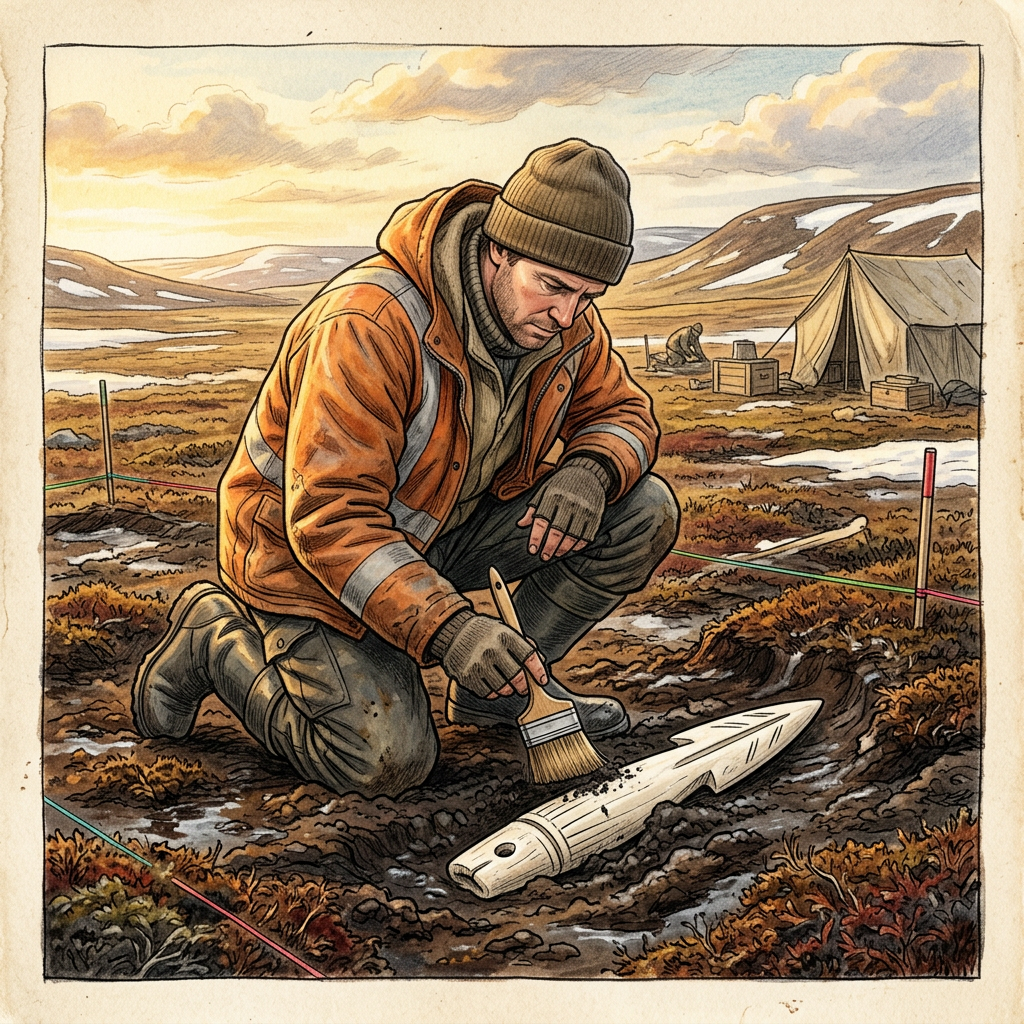
Rapidly warming temperatures in the Canadian Arctic have led to the discovery of an exceptionally preserved Palaeo-Inuit whaling site on Baffin Island. As the permafrost recedes, archaeologists have recovered organic artifacts that are usually lost to time, including harpoon heads crafted from walrus ivory still bound with original baleen and sinew cordage.
Environmental historians believe these artifacts provide crucial evidence of how early Arctic inhabitants adapted to a period of localized climate warming known as the 'Pre-Dorset Thermal Maximum.' The structural design of the harpoons suggests a highly specialized technology for hunting bowhead whales, a practice previously thought to have developed much later in the regional chronology.
The site also yielded preserved willow-bark baskets containing dried meat, offering a rare glimpse into the dietary habits and food-storage strategies of 2,000 BCE. Researchers are racing to document the site before the newly exposed organic materials decompose due to exposure to oxygen and bacteria.