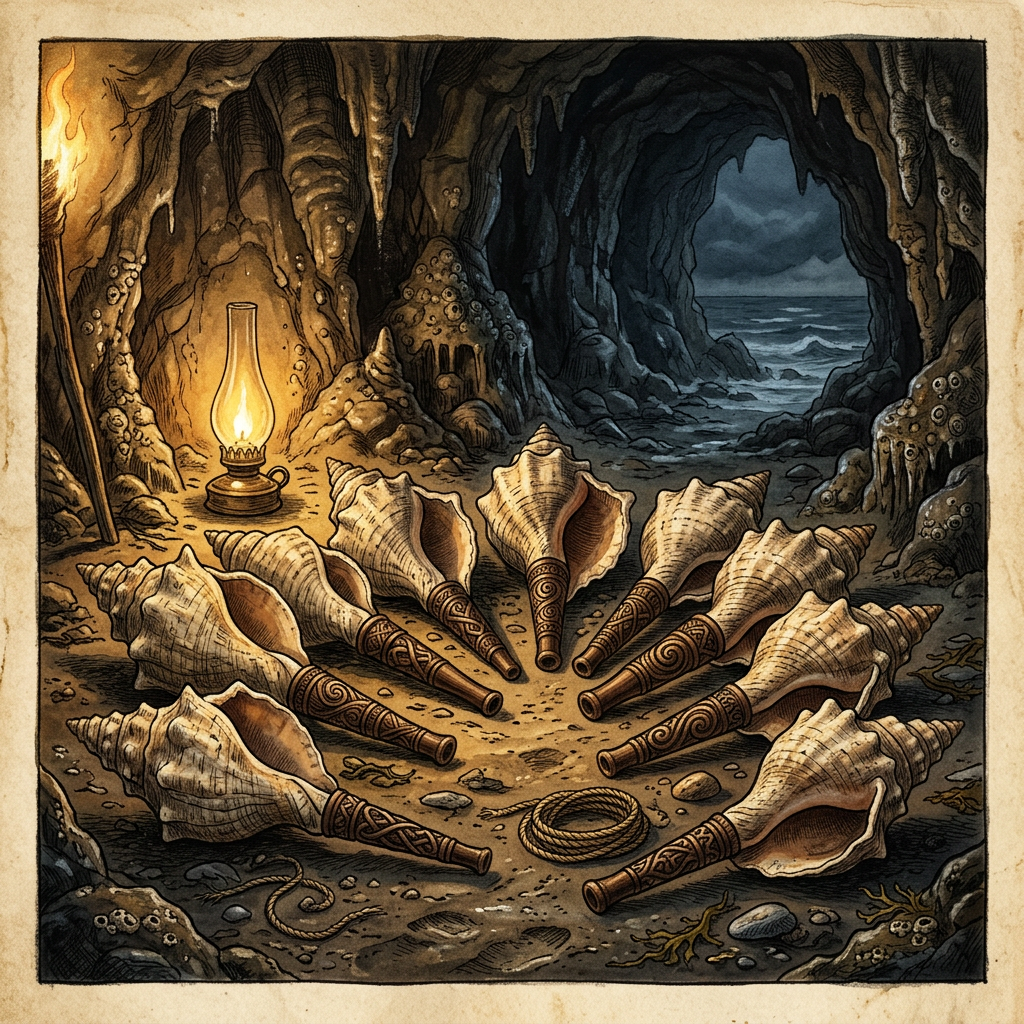
In a coastal cave near Taranto, archaeologists have discovered a hidden cache of over thirty Charonia lampas (sea snail) shells, each meticulously modified with a mouthpiece. Carbon dating and stylistic analysis link these instruments to the religious festivals of Magna Graecia, specifically processions dedicated to the sea god Poseidon and his son Triton.
Acoustic tests on the shells revealed they were tuned to produce a haunting, low-frequency sound capable of carrying over long distances across the water. This discovery illuminates the sonic landscape of ancient maritime festivals and the specific role of conch-shell music in early Mediterranean ritual life.