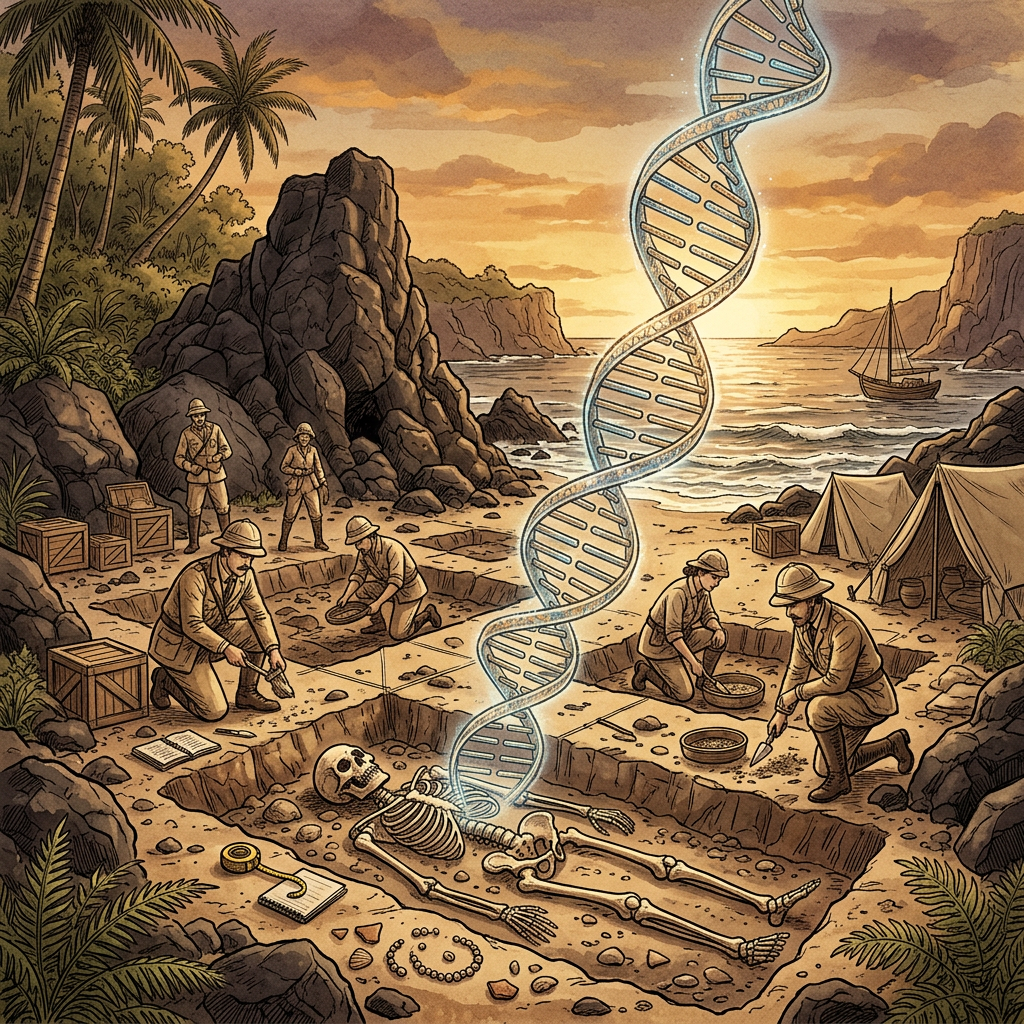
New research published in Nature Ecology & Evolution has unveiled the results of a large-scale paleogenomic study focusing on human remains found in the sea caves of the Konkan Coast. The genetic data, dated to 12,000 years ago, identifies a previously unknown "ghost lineage" of maritime foragers who occupied the western coast of India during the late Pleistocene. This population shows a unique genetic signature that diverges significantly from the contemporary hunter-gatherers of the interior Deccan Plateau.
The findings suggest that India's coastline was home to highly adapted maritime communities far earlier than previously documented. Genetic markers identified in the study indicate a diet rich in deep-sea resources and high-salinity tolerance, providing new insights into how early human populations navigated the post-glacial rising sea levels in the Indian Ocean.