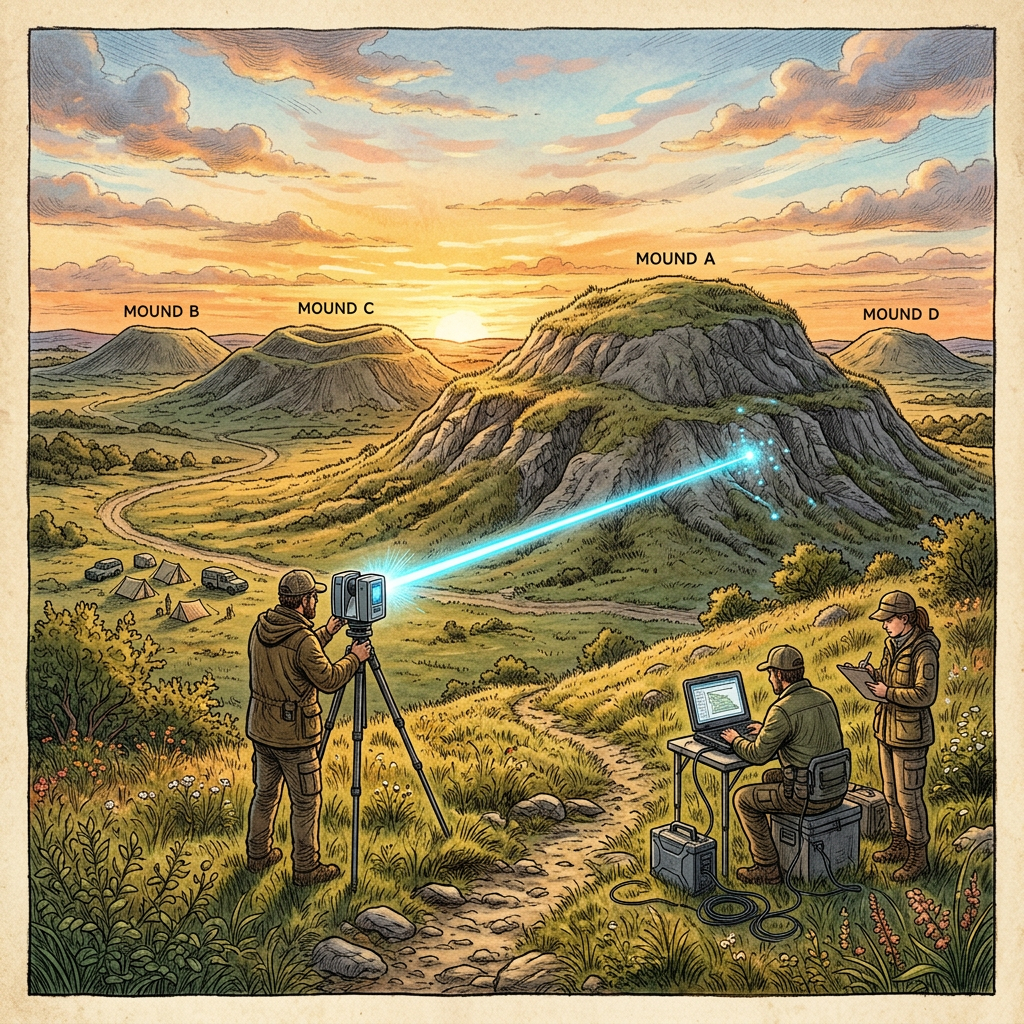
A revolutionary dating technique utilizing Helium-3 cosmogenic nuclide surface exposure has been successfully applied to the Neolithic ashmounds of northern Karnataka. This new methodology, detailed in the Journal of Archaeological Method and Theory, allows researchers to determine the exact time these ritual mounds were formed with seasonal precision, pushing the timeline of systematic pastoralism in the region to a more nuanced calendar.
Unlike traditional radiocarbon dating, this technique measures the accumulation of rare isotopes directly in the vitrified slag and ash layers. The results indicate that the ash-burning ceremonies were not sporadic but synchronized with precise equinoctial cycles, suggesting a complex integration of cattle-based economy and solar-lunar calendars as early as the 3rd millennium BCE.