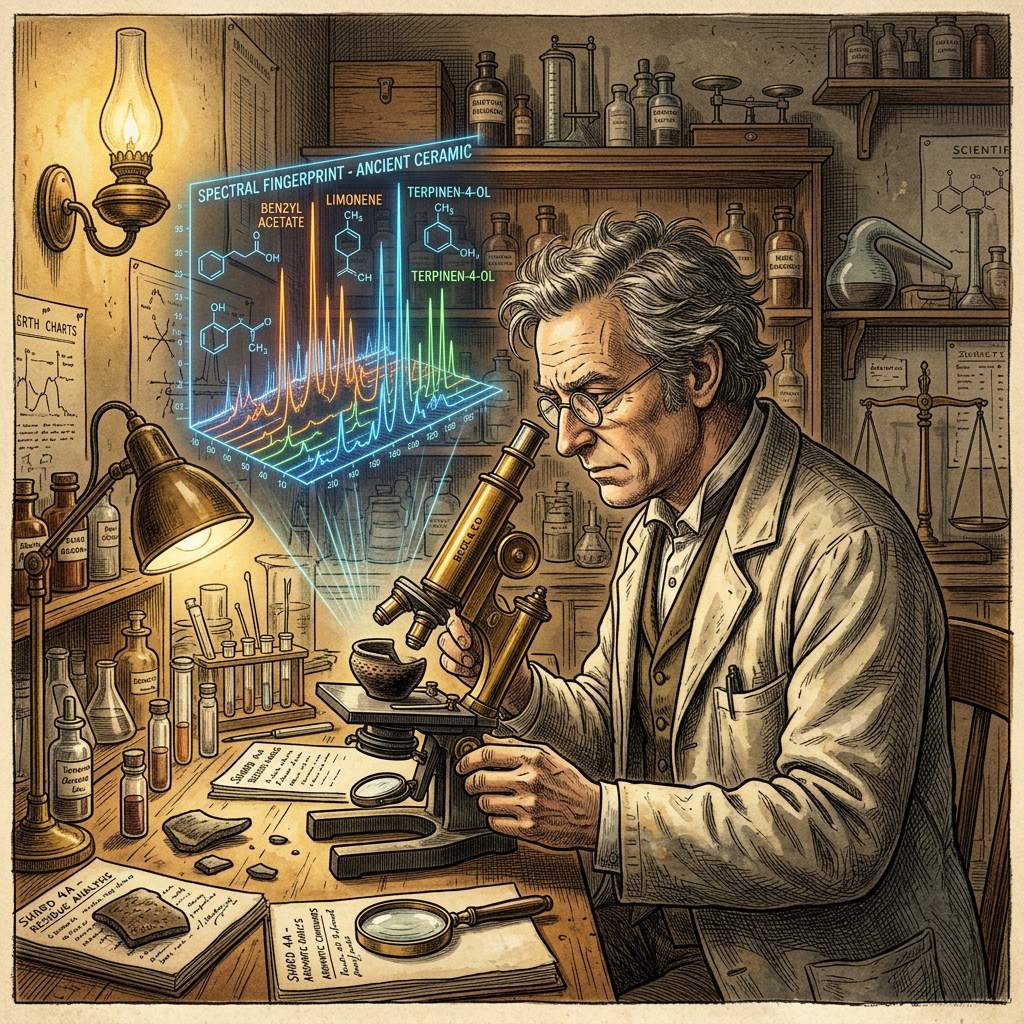
Chemical researchers at the National Heritage Laboratory have used Raman spectroscopy to analyze organic residues trapped within 5th-century ceramic jars excavated at Kausambi. The analysis revealed complex chemical signatures of sandalwood, vetiver, and camphor, along with trace evidence of a sophisticated fractional distillation process. This confirms that early Ayurvedic practitioners were using advanced pharmaceutical techniques to produce high-purity essential oils.
The study, featured in the Journal of Archaeological Science, notes that the temperature-controlled distillation apparatus described in texts like the Charaka Samhita was practically applied at an industrial scale. The purity of the residues suggests a level of metallurgical and chemical control previously thought to have emerged several centuries later in the Islamic Golden Age.