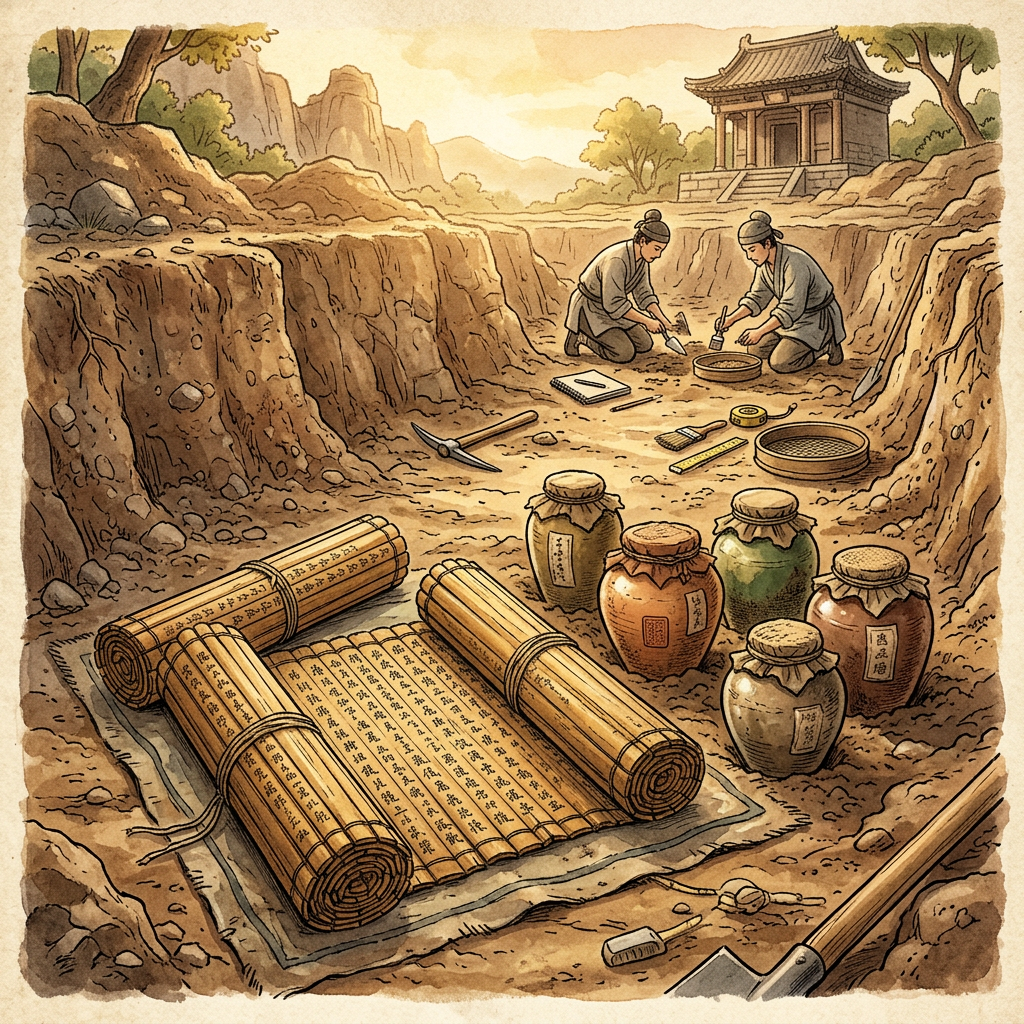
A major excavation in Henan Province has revealed an elite residence from the Warring States Period containing a dedicated medical laboratory. The site yielded a wooden chest filled with over 150 bamboo slips that comprise a comprehensive herbal compendium, listing treatments for respiratory ailments, digestive disorders, and battlefield trauma. This is one of the earliest known systematic records of traditional Chinese medicine.
Beside the texts, researchers found hundreds of sealed ceramic jars containing carbonized botanical samples, including ginger, cinnamon, and various wild herbs. The sophisticated layout of the 'apothecary'—with separate areas for grinding, boiling, and drying—suggests that early Chinese scholars were conducting rigorous pharmacological research centuries before the unification of the empire. This discovery significantly pushes back the timeline for the professionalization of medical practice in East Asia.