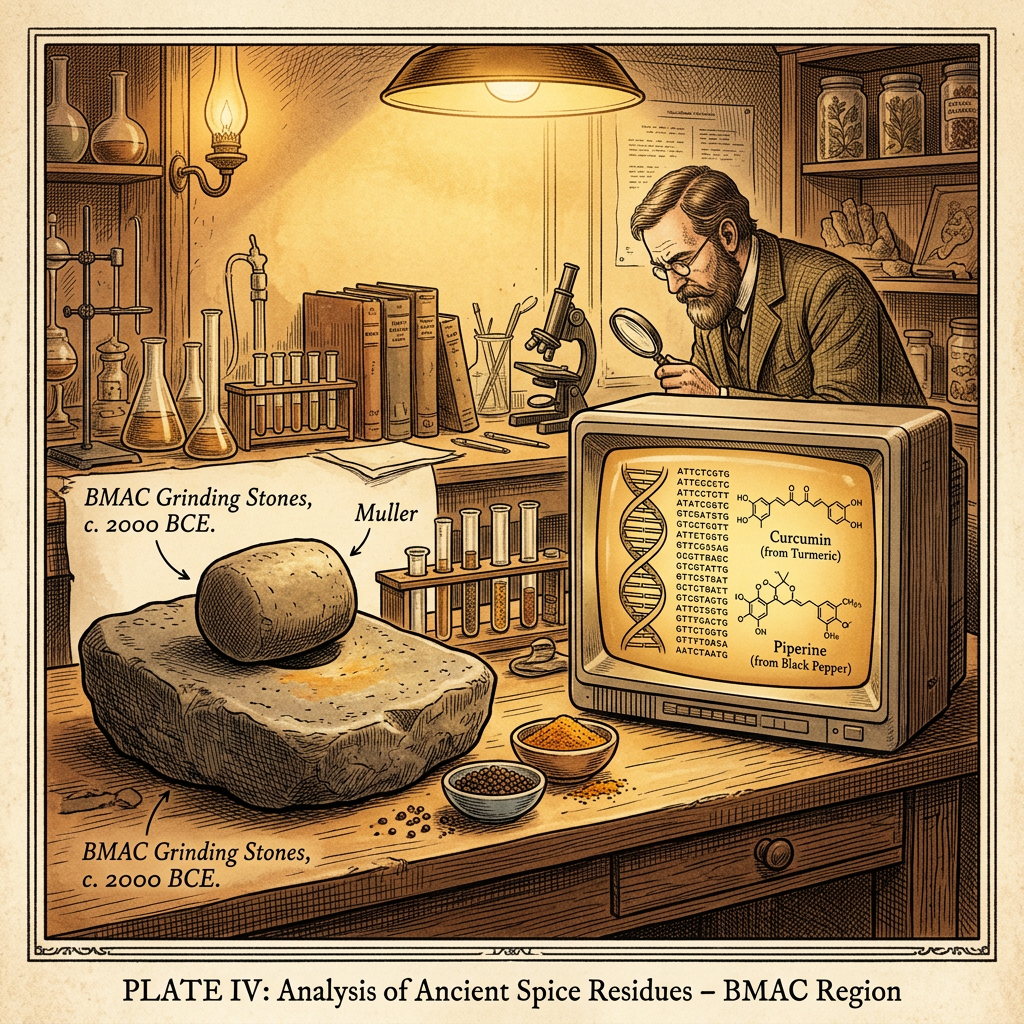
A ground-breaking paleogenomic study published in Nature Genetics has analyzed the remains of individuals from the Bactria-Margiana Archaeological Complex (BMAC) dating back to 2000 BCE. The research identifies a unique genetic cluster among individuals buried with specialized grinding tools, suggesting the existence of hereditary professional guilds dedicated to the processing of exotic spices and medicinal resins.
This genetic analysis reveals that these "spice-processing" populations maintained a degree of endogamy, distinct from the broader pastoralist and agricultural groups in the Oxus region. The presence of chemical residues such as black pepper and cardamom on their tools provides the first biological link between early Central Asian genetic structures and the burgeoning international spice trade of the Bronze Age.