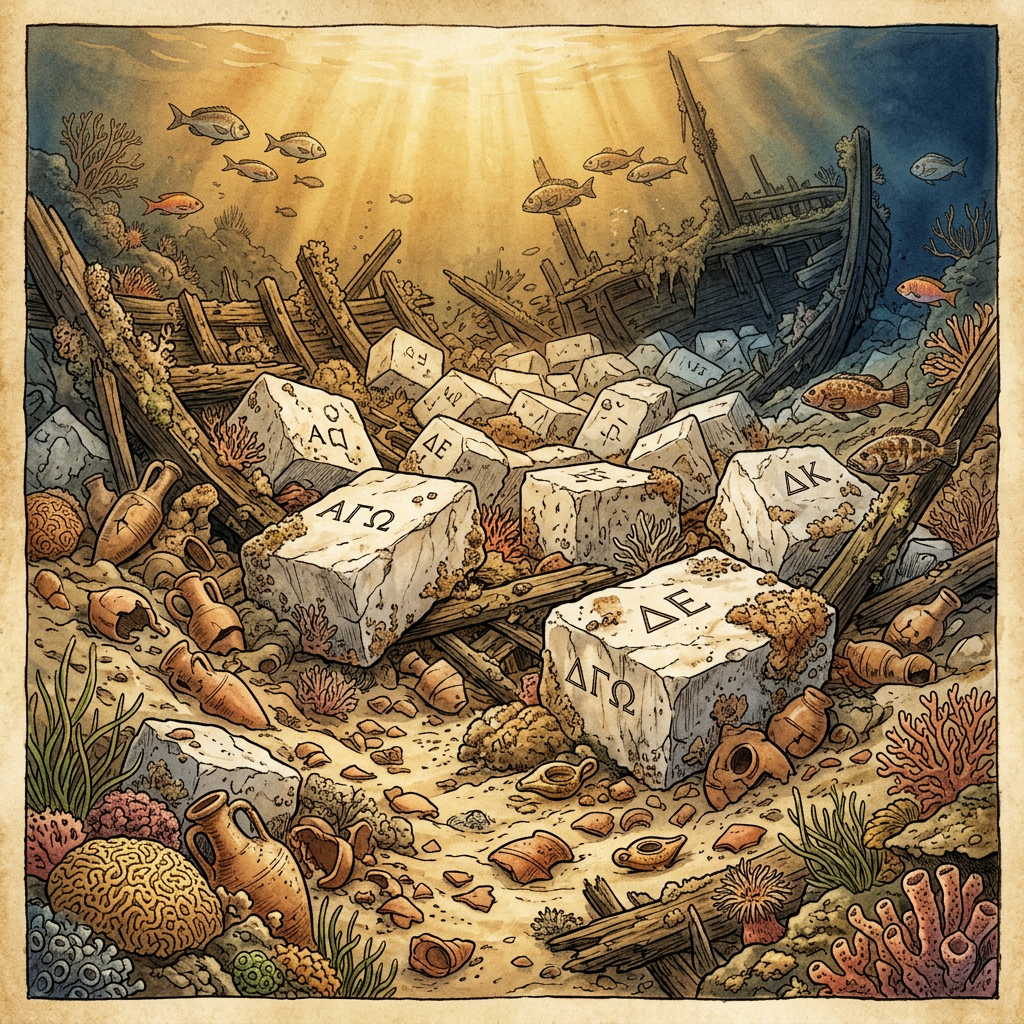
Underwater archaeologists have identified the remains of a 2nd-century CE Roman merchant vessel submerged at a depth of 45 meters off the coast of Zadar, Croatia. The wreck is notable for its heavy cargo of Thracian marble blocks and partially carved column capitals, which were likely destined for an imperial construction project in the western Mediterranean.
Analysis of the ship's hull construction indicates it was built using the mortise-and-tenon technique, common during the height of the Roman Empire's maritime trade. The recovery of lead seals and ceramic oil lamps from the crew's quarters suggests the vessel originated from the Aegean, providing new data on the logistics of transporting heavy building materials across the Adriatic Sea.