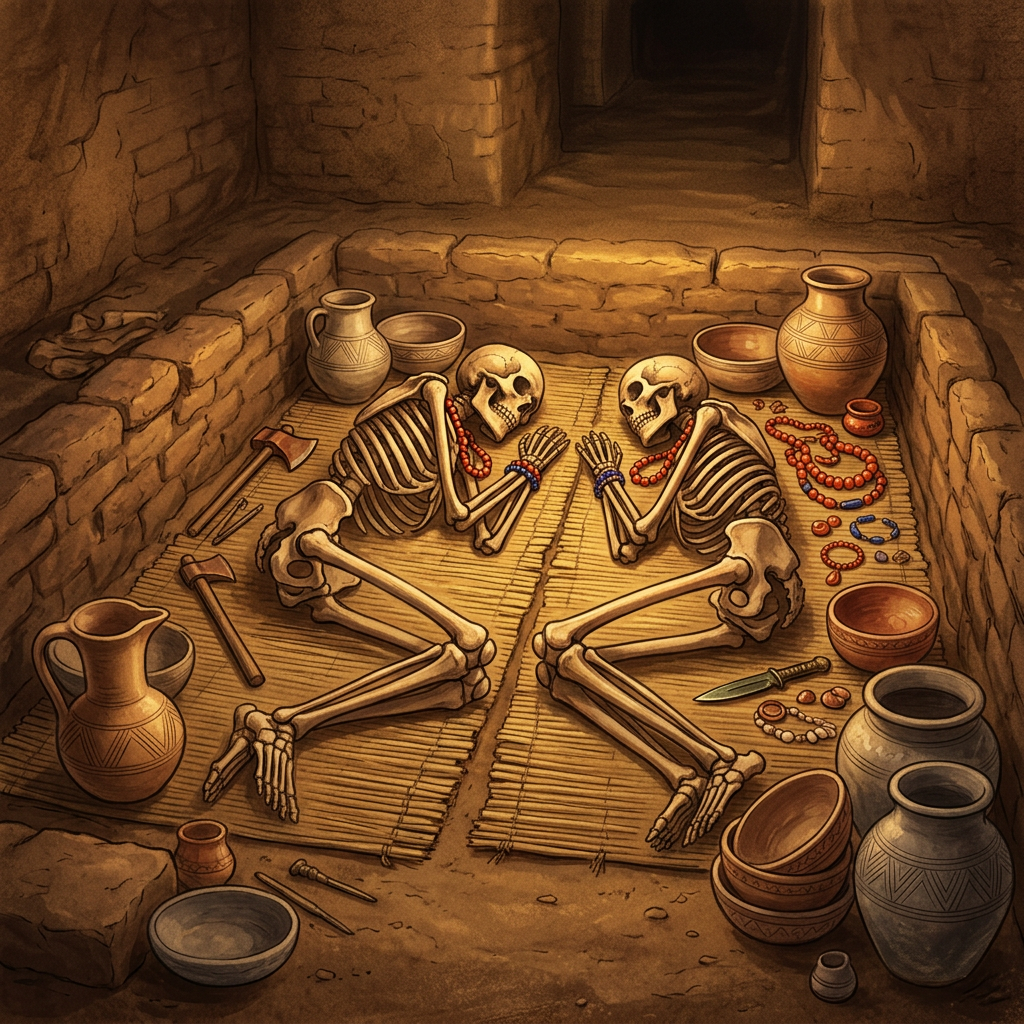
A breakthrough paleogenomic study published in Nature Genetics has successfully sequenced the DNA of two individuals buried in the ancient Sumerian city of Kish, identifying a direct genetic link to the Mature Harappan civilization. This research provides the first biological evidence of permanent Indus settlements in Mesopotamia, specifically highlighting maternal lineages that moved between the two regions during the third millennium BCE.
The findings suggest that the interaction between the Indus Valley and Mesopotamia was not limited to male-centric trade guilds but included complex social and familial structures. The genetic signature reveals that these individuals were part of a multi-generational community that maintained its distinct South Asian ancestry while living within the Sumerian urban landscape, fundamentally altering our understanding of ancient globalization.