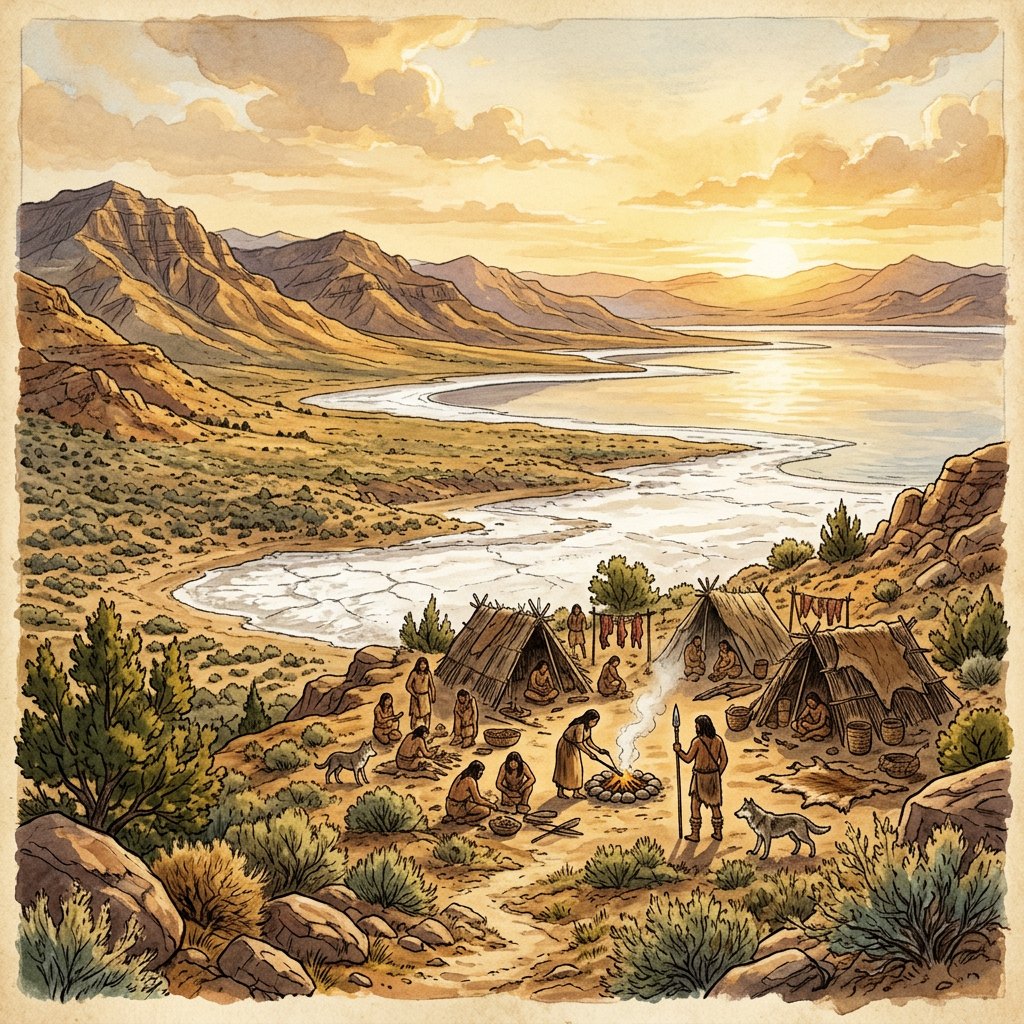
Published in the journal Science, a massive genomic study of remains found in the Great Basin of North America has uncovered a unique genetic mutation related to sodium-calcium regulation. This adaptation allowed Paleo-American populations to survive by drinking water from highly alkaline terminal lakes during the transition from the late Pleistocene to the Holocene.
The research provides a fascinating look at rapid genetic evolution in response to extreme environmental shifts. By comparing these ancient genomes to modern populations, researchers have mapped the disappearance of this specific 'alkali-resilience' lineage as environmental conditions stabilized, providing a rare case study in the temporary genetic specialization of human groups.