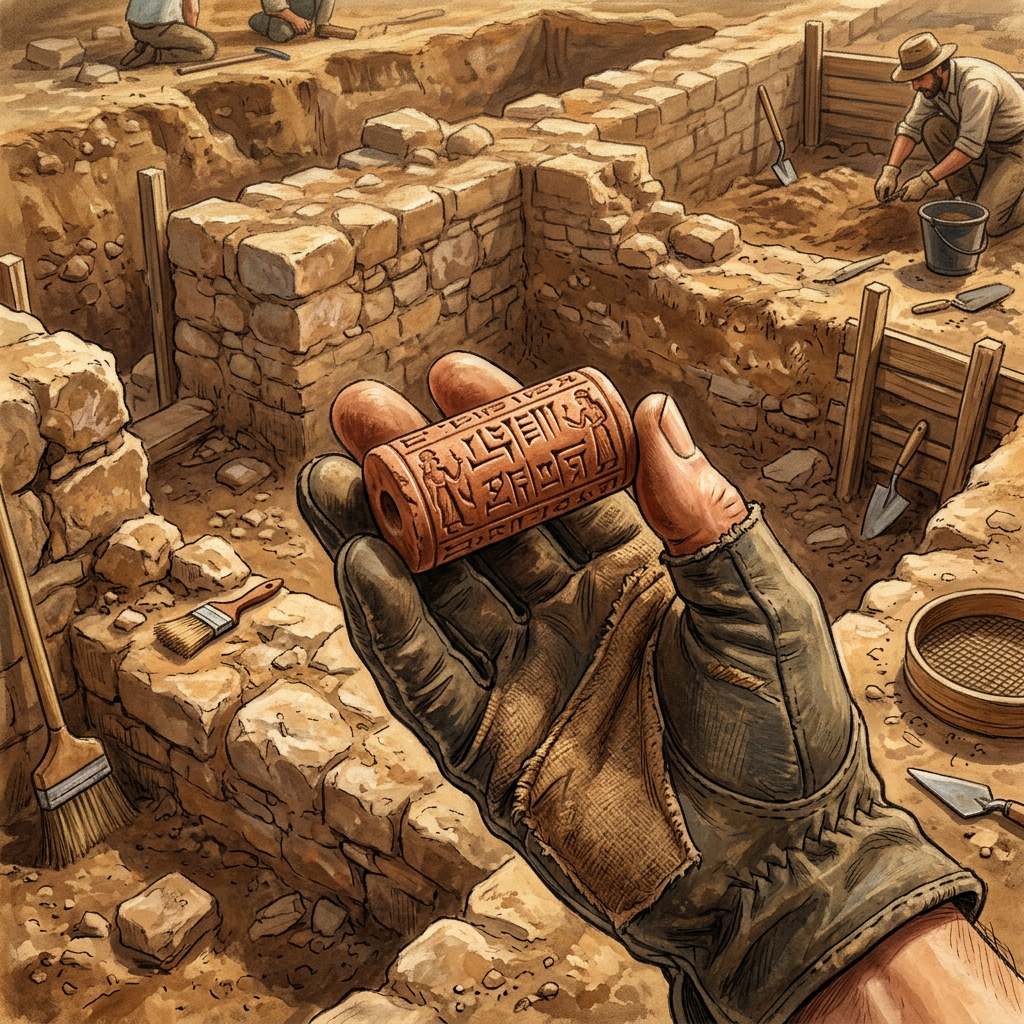
The Archaeological Survey of India (ASI) has announced the discovery of several clay seals in Ujjain dating back to the 6th century BCE. The seals are inscribed with early Brahmi symbols that translate to Anirvachaniya-Vada—the doctrine of the inexpressible. This discovery is revolutionary, as it pushes back the conceptual origins of the "inexpressible nature of reality," a cornerstone of later Advaita Vedanta, by several centuries into the late Vedic period.
The seals were found in a residential layer associated with high-ranking scholars or priests, suggesting that the philosophy of linguistic limitation was already a subject of debate in urban centers like Ujjain. The text on the seals implies that the ultimate reality transcends the categories of existence and non-existence, providing an early archaeological anchor for the sophisticated skepticism and metaphysical depth found in the later Upanishadic commentaries.