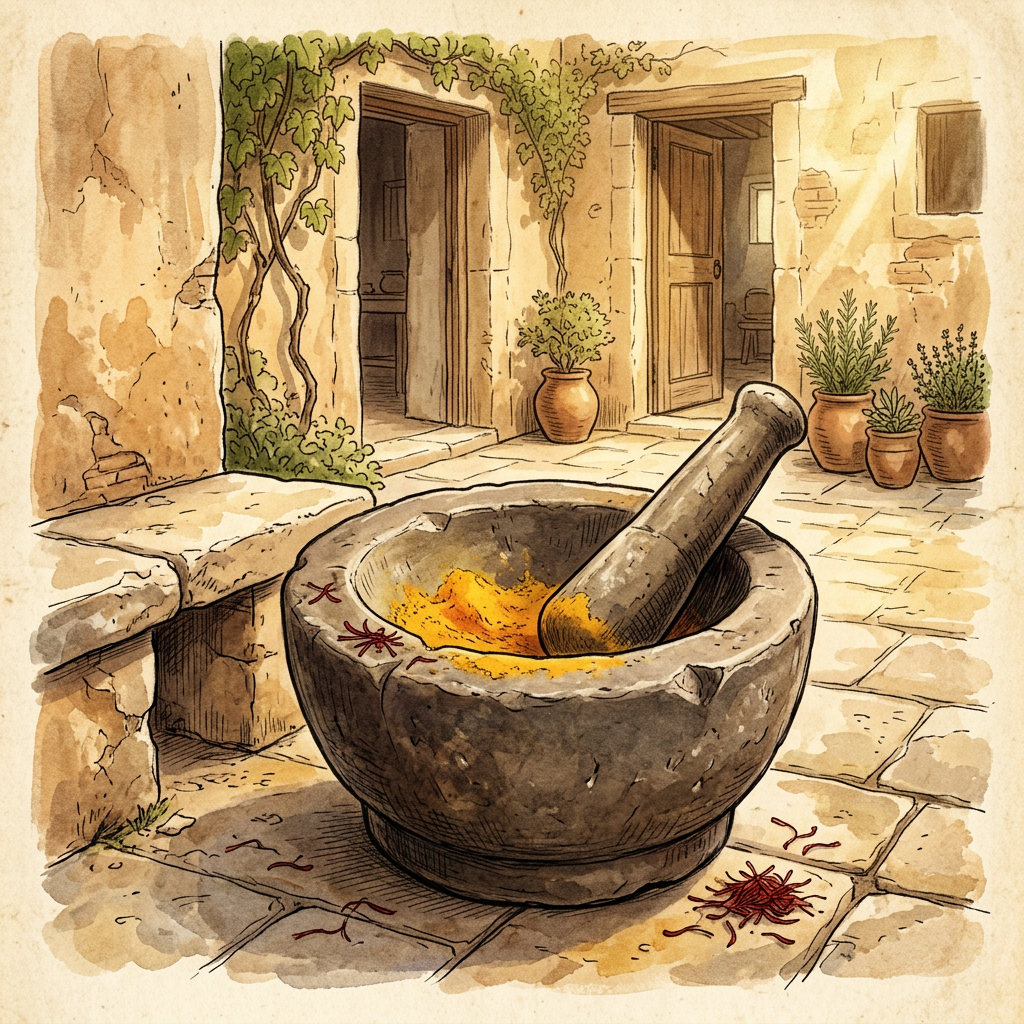
Recent analysis of stone mortars at the Bronze Age site of Erimi in Cyprus has revealed microscopic residues of Crocus sativus (saffron). The specific placement of these tools within a central courtyard suggests they were used during a large-scale floral processing festival, where the precious pigment was extracted for both ritual anointing and communal dyeing of festive garments.
This find suggests that Cyprus was a major center for a 'Festival of Flowers' that predates more famous Aegean counterparts. The rituals likely combined agricultural celebration with the worship of a local fertility goddess, establishing a cultural tradition of floral offerings that has persisted in the Mediterranean for thousands of years.