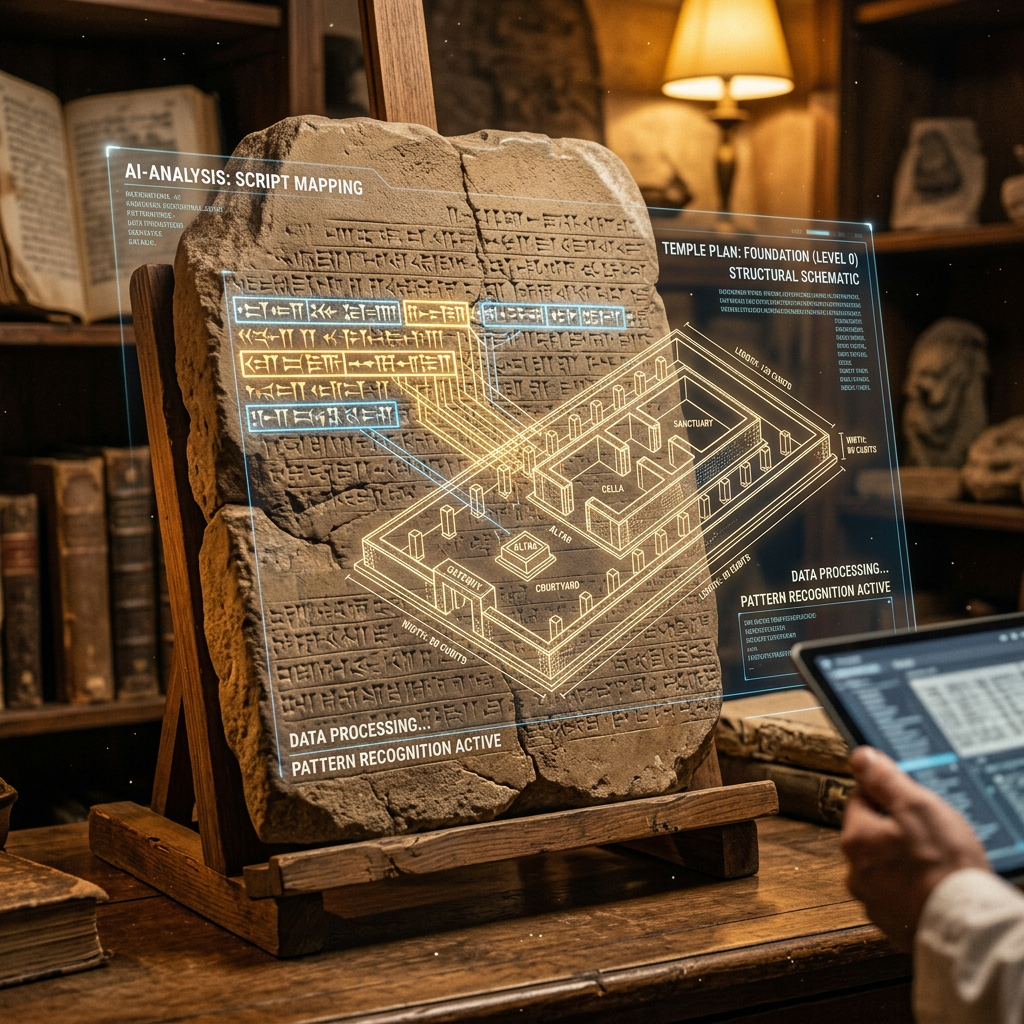
In a breakthrough for heritage science, AI algorithms have successfully decoded a series of damaged 11th-century inscriptions found at the Someshwara Temple in Haveri, Karnataka. The texts, written in Old Kannada, provide a detailed manual for the construction of 'Trishala' (three-shrine) temple layouts. Most remarkably, the inscriptions describe the use of specific layered foundations composed of river sand, lead sheets, and charcoal intended to protect the stone structures from seismic tremors.
Engineers and archaeologists are now reviewing these ancient blueprints to understand how the Western Chalukya builders achieved such longevity in their monuments. The data revealed by the AI analysis suggests that these 'seismic dampening' techniques were standardized across several temples in the region, explaining why many structures survived major historical earthquakes with minimal structural damage.