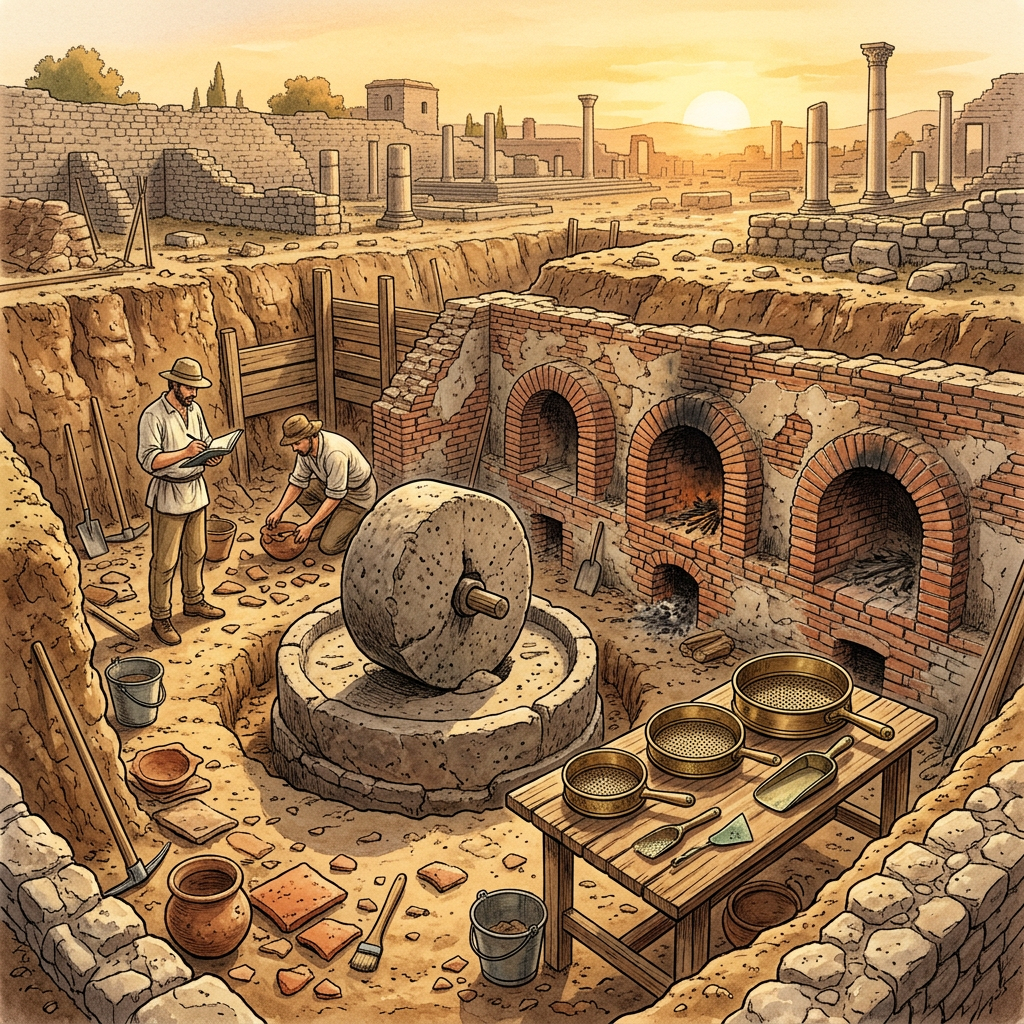
Archaeologists excavating near the village of Corbridge have unearthed a massive Roman Industrial Flour-Mill and Bakery. The facility, which dates to the 2nd century CE, was capable of producing enough bread to feed over 2,000 soldiers daily, making it one of the largest food-processing hubs found in Roman Britain. The site features a series of water-driven millstones and large ovens constructed from heat-resistant local sandstone.
Crucially, the team recovered perforated bronze plates used as industrial-scale grain sifters, a rare find that illustrates the high standards of Roman food technology. Soil samples from the site revealed traces of imported emmer wheat and local barley, indicating a diverse supply chain. This discovery provides fresh insights into the logistical challenges faced by the Roman military in maintaining the northern frontier and the scale of domestic industries supporting the legions.