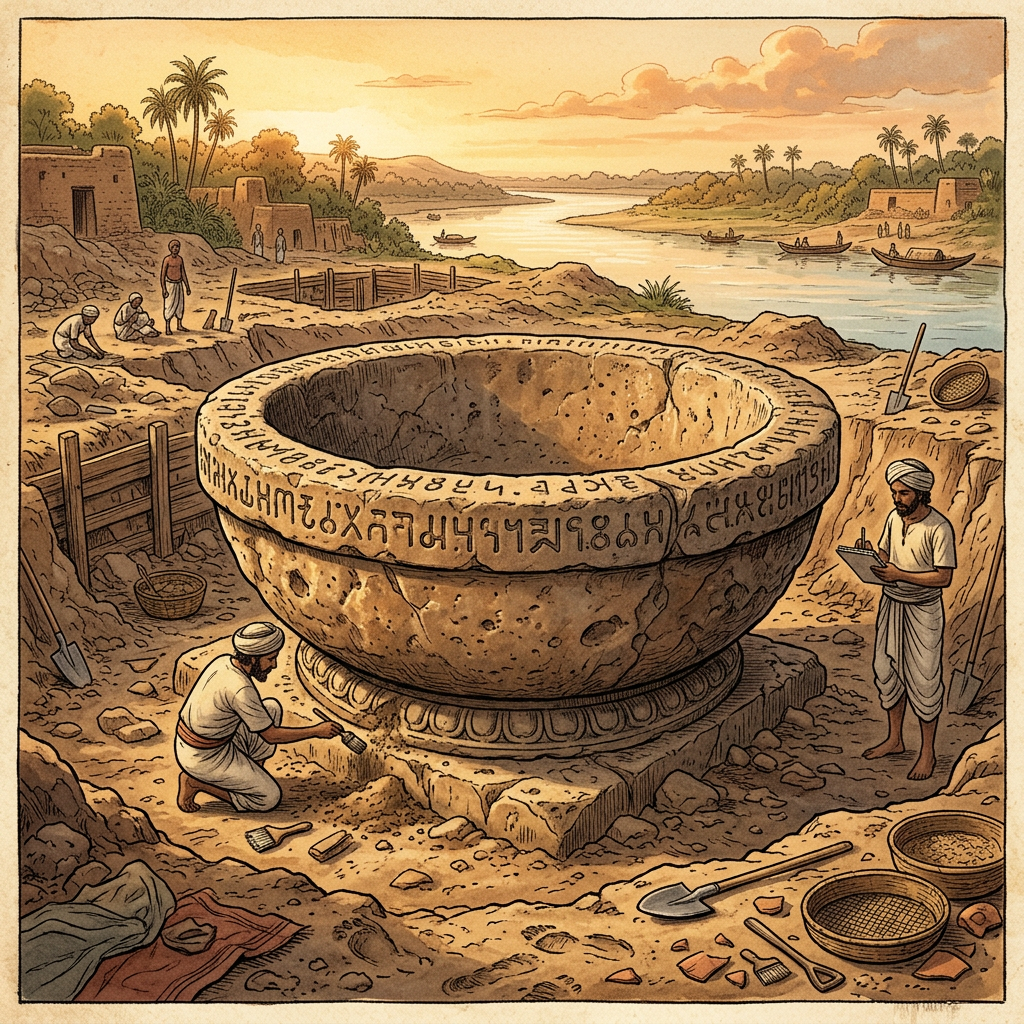
Archaeologists working in the Krishna River Valley have successfully deciphered a series of 4th-century BCE Brahmi inscriptions on stone vessels, referred to as the 'Dharma-Ghatika' or 'Clock of Ethics'. The text outlines an early Vedic philosophical approach to Kala (time), viewing it not as a linear progression but as a moral obligation for governance and ritual accuracy.
Researchers state that these inscriptions pre-date many known treatises on ancient Indian chronometry. They detail how equitable time-sharing was considered a foundational virtue in early agrarian societies, linking the precision of seasonal cycles to the concept of Rta (cosmic order). This discovery highlights a sophisticated integration of ethics and early scientific observation in the pre-Mauryan era.