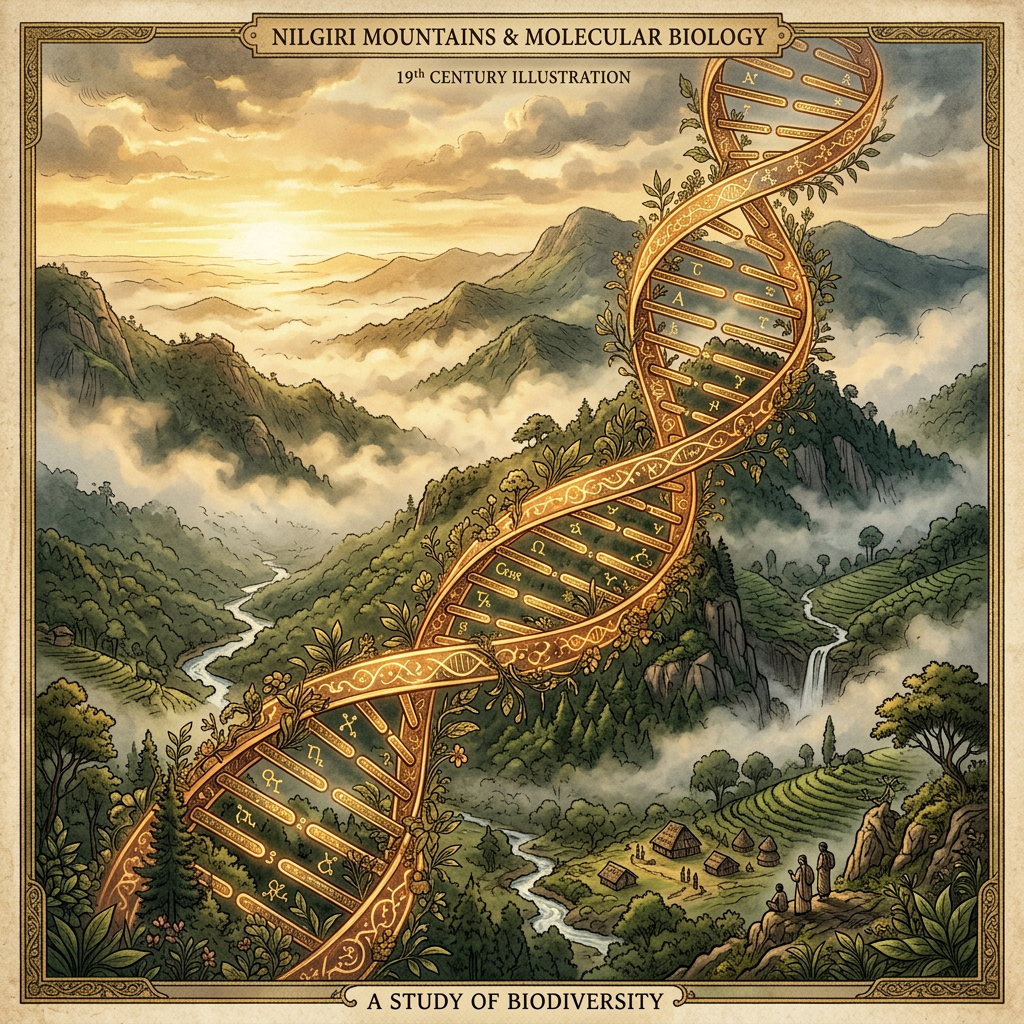
A team of paleogeneticists from the Centre for Cellular and Molecular Biology (CCMB) has sequenced the genomes of individuals from a Mesolithic rock shelter in the Nilgiri foothills. The study, published in Genome Research, reveals a specific variation in the CYP2 gene cluster, which facilitated the detoxification of local alkaloids found in wild tubers and forest produce. This suggests a long-term evolutionary interaction between the indigenous populations and the unique flora of the Western Ghats.
The analysis also confirms that these populations maintained a high degree of genetic isolation for several millennia, surviving multiple climatic fluctuations by specializing in high-altitude forest niches. This genetic hallmark provides a new baseline for understanding the deep ancestry of Southern India's tribal communities and their historical resilience to environmental toxins.