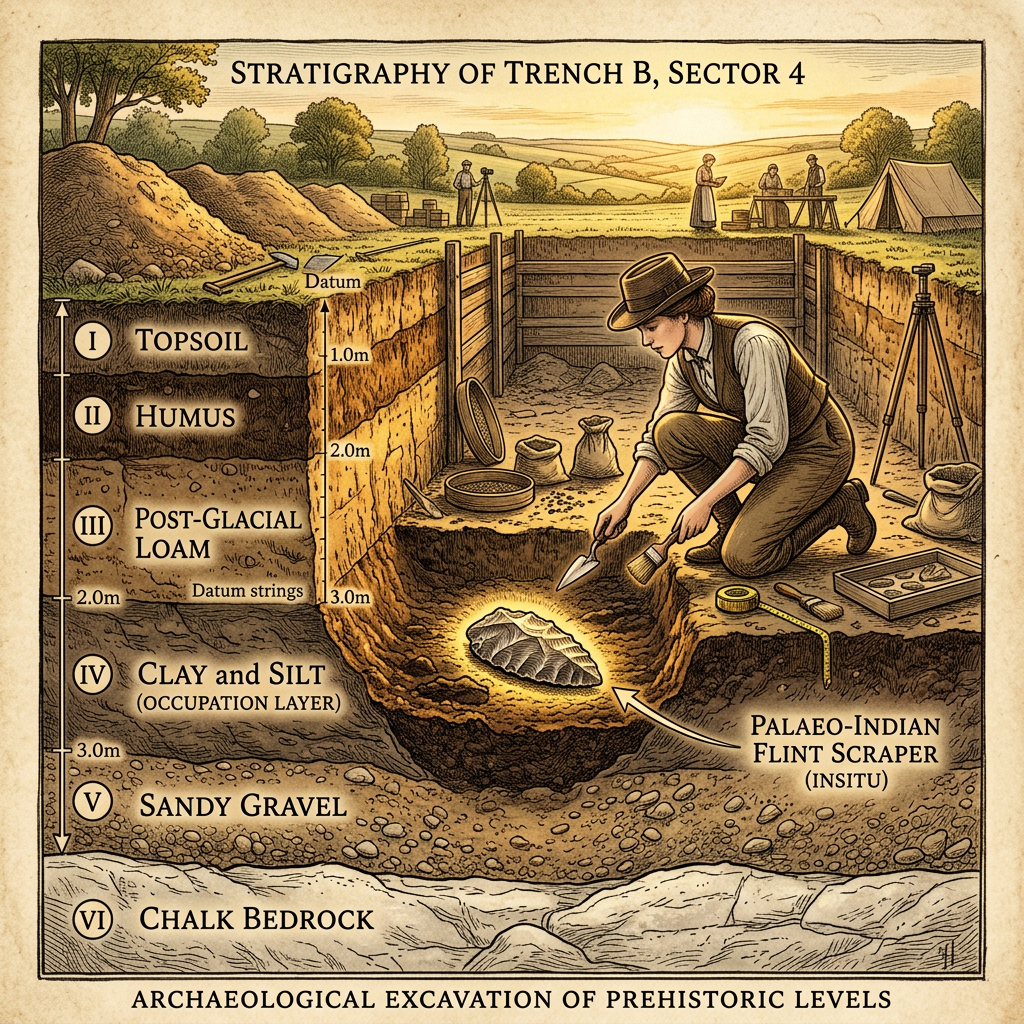
A multi-institutional study published in the Journal of Human Evolution has utilized high-resolution Uranium-Lead (U-Pb) dating on calcium carbonate encrustations found on stone tools in the Eastern Ghats. The results push back the chronology of the Middle Paleolithic transition in India, suggesting that hominin behavioral evolution in South Asia was contemporaneous with similar shifts in Africa. This challenges the 'Late Expansion' model of human cognitive development.
The site, located in the Gundlakamma river basin, yielded a dense sequence of microlithic tools embedded in stratified volcanic ash and carbonate layers. The dating of these layers confirms that early hominins in the Indian peninsula were producing standardized, small-scale flake tools significantly earlier than previously estimated, indicating a complex and independent trajectory of technological innovation.