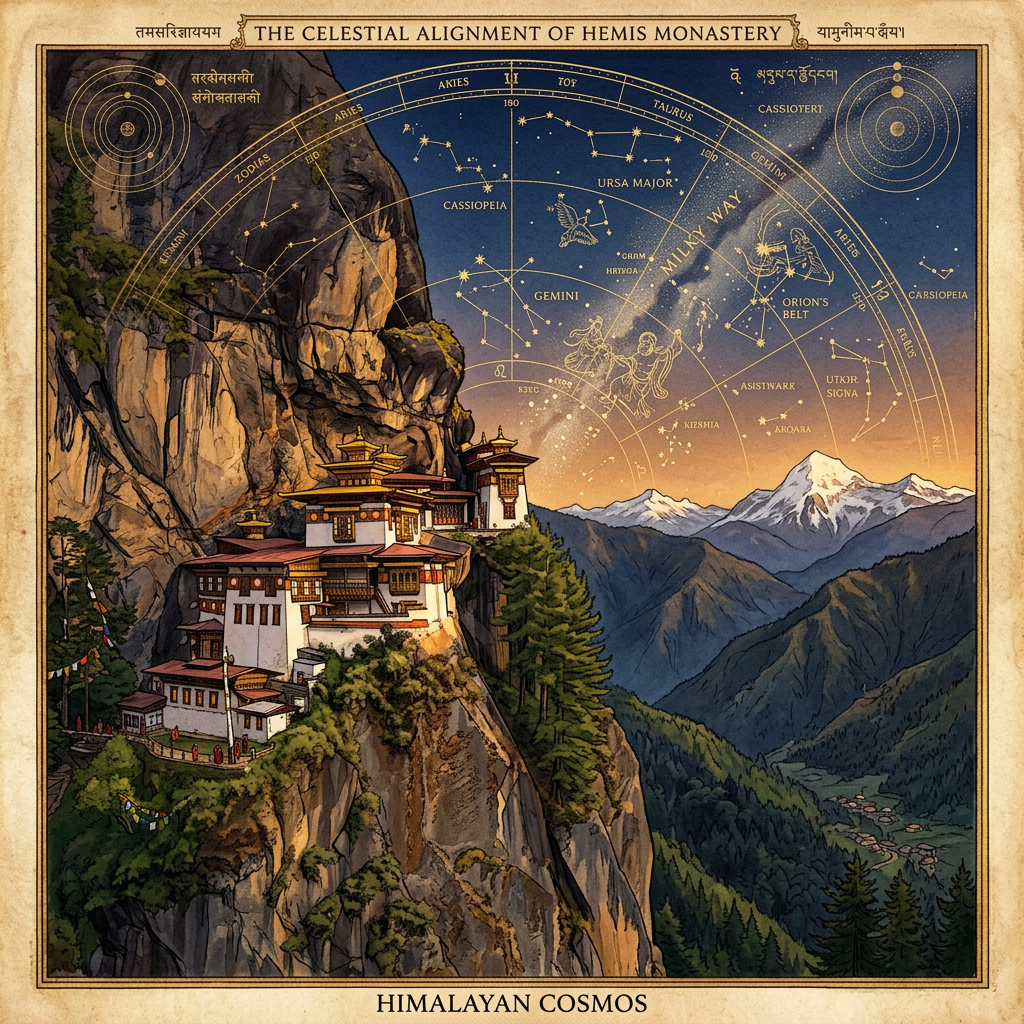
Scholars from the Tribhuvan University and the International Astronomical Union have analyzed a series of 5th-century Sanskrit astronomical tables discovered in a remote monastery in the Mustang region. Using AI-driven computational modeling, the team confirmed that the ancient observers had calculated the rate of the precession of the equinoxes with an error of less than 1.5% compared to modern values. The text appears to be a regional variation of the early Aryabhatian school.
The study indicates that these observations were likely conducted from high-altitude locations, providing atmospheric clarity that allowed for the precise tracking of the stellar positions over several decades. This research proves that the mathematical rigor of the Gupta-era scientific renaissance extended well into the Himalayan corridors.