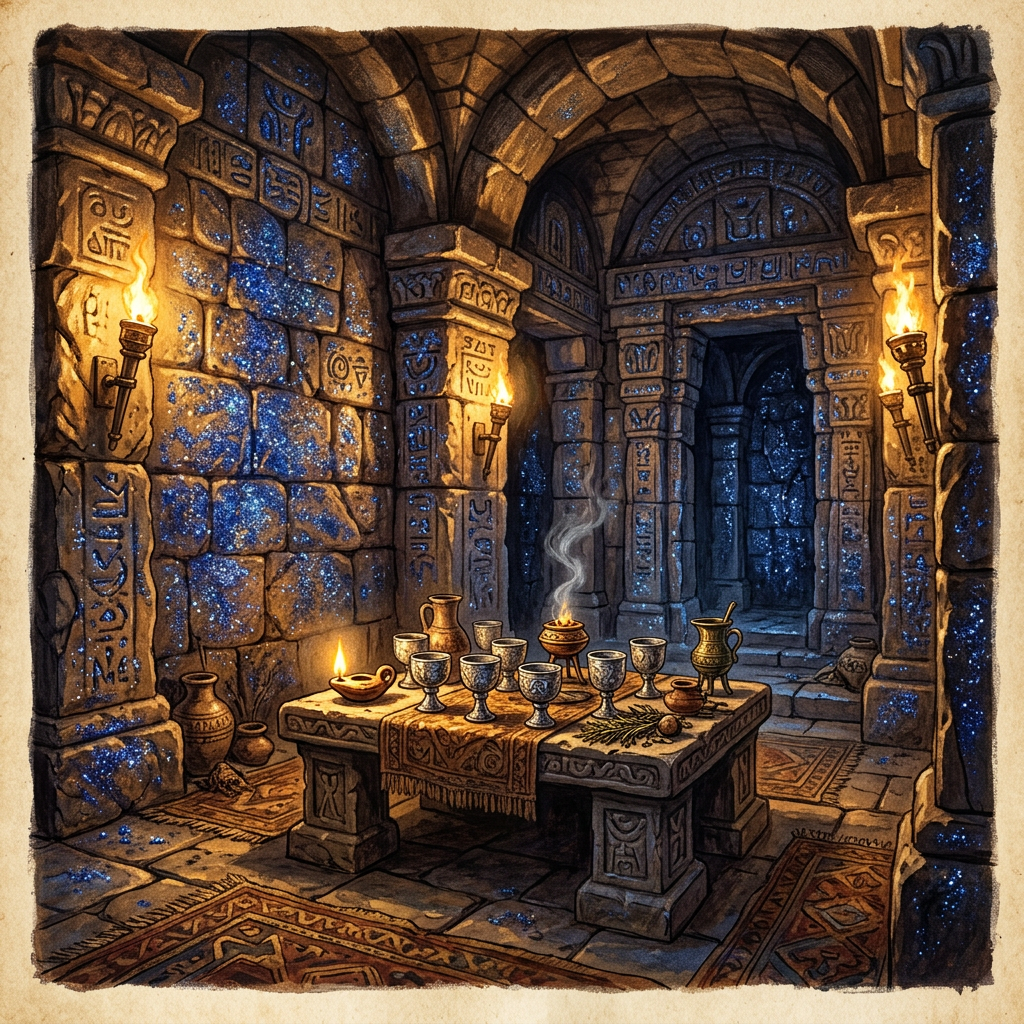
At a Bronze Age site in northern Afghanistan, excavators have discovered a series of subterranean chambers lined with crushed lapis lazuli and gold leaf. These rooms were used for the ritual storage of 'mother seeds' during a multi-day festival known as the 'Festival of the Sown Field', intended to ensure the fertility of the upcoming agricultural cycle.
The discovery includes silver libation vessels and small alabaster statues of fertility figures, pointing to a highly organized religious elite who managed seasonal rites. This find highlights the interconnectedness of trade and ritual, as the exotic materials used in the chambers signify the extreme importance placed on securing a bountiful harvest through divine favor.