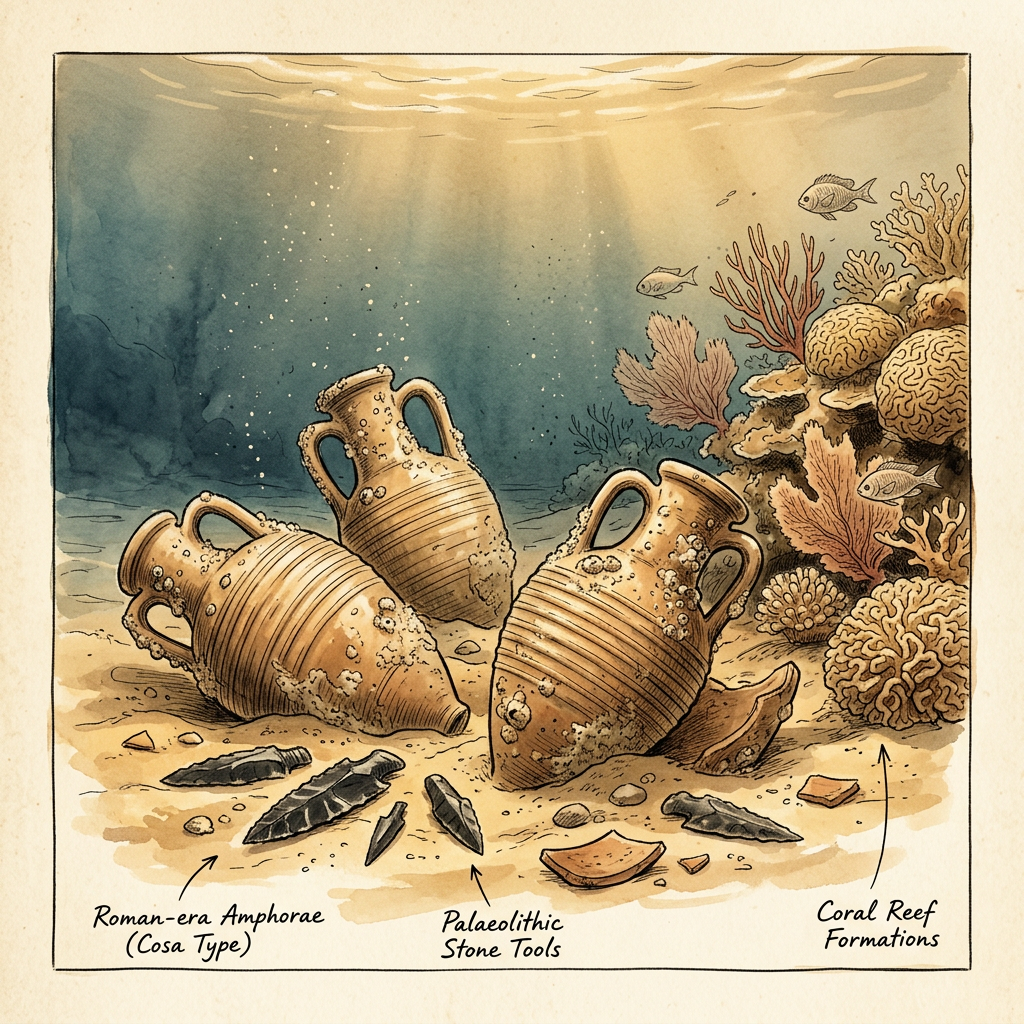
A new underwater archaeological survey has identified a previously unknown maritime trade network linking the indigenous peoples of western Cuba with the Maya of the Yucatan Peninsula. Researchers discovered a series of submerged caches containing high-quality obsidian blades and ceramic vessels with traces of cacao, dating between 800 and 1100 CE. This discovery challenges long-held theories about the isolation of Caribbean island cultures from the mainland Mesoamerican civilizations.
The study suggests that specialized seafaring groups utilized advanced large-scale canoes to navigate the Yucatan Channel, exchanging luxury goods and ritual items. The presence of specific obsidian signatures from the volcanic highlands of Guatemala found in Cuban coastal sites proves a sophisticated, multi-stage supply chain that relied on seasonal currents and celestial navigation. This 'Obsidian-and-Cacao' route redefines our understanding of pre-Columbian economic integration in the Americas.