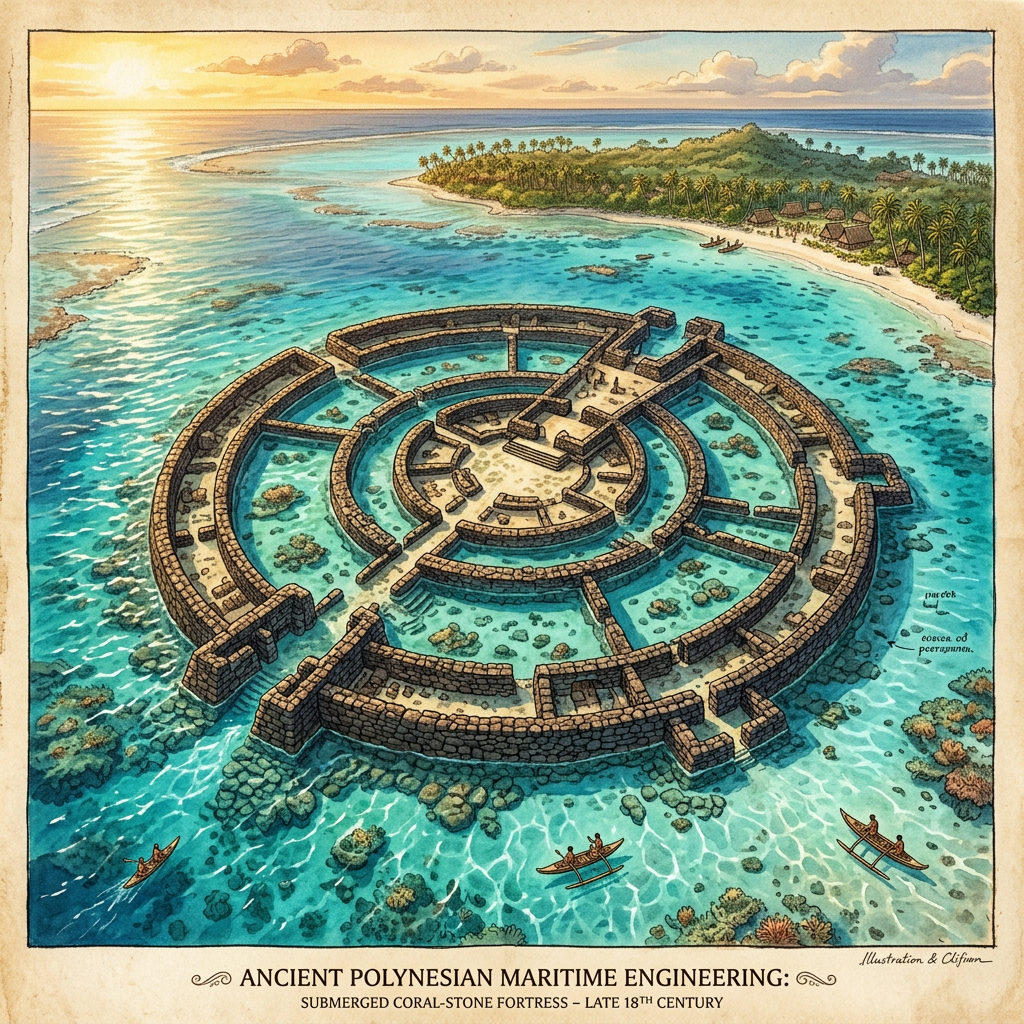
Groundbreaking research in the Tuamotu Archipelago has uncovered evidence of sophisticated 1,500-year-old engineering designed to combat rising sea levels. Climate archaeologists mapping submerged coral-stone structures discovered that early Polynesian settlers built adaptive dynamic sea-walls that allowed for controlled flooding and sediment deposition, effectively raising the elevation of their habitable islands over generations. These findings suggest that ancient Pacific societies possessed a deep understanding of coastal geomorphology and climate variability.
By analyzing stable isotopes in the coral blocks, researchers were able to correlate construction phases with historic sea-level fluctuations. The study highlights the resilience of indigenous engineering compared to modern static sea-walls, which often exacerbate erosion. Experts suggest that these ancient "nature-based solutions" could offer vital blueprints for modern island nations currently facing the existential threat of anthropogenic climate change.