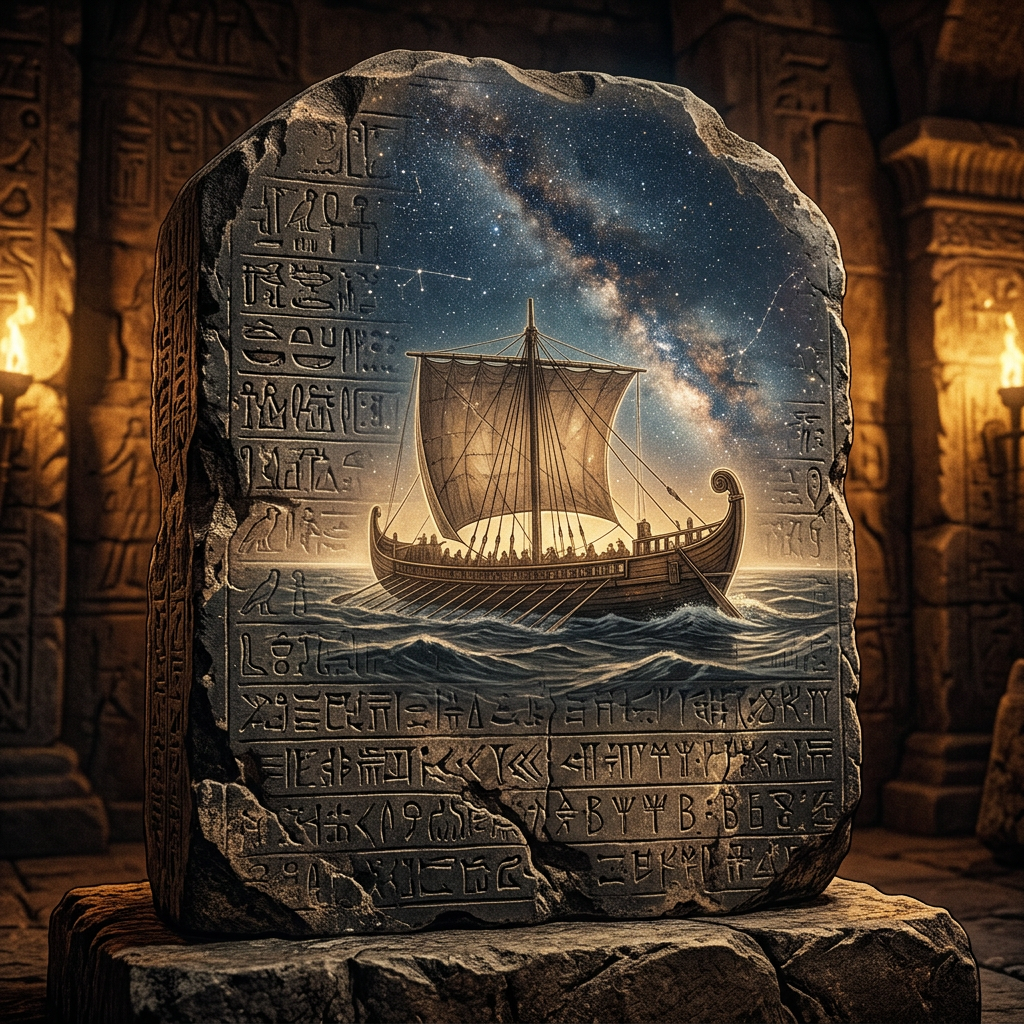
Epigraphists working in central Vietnam have announced the successful decipherment of a series of bilingual Grantha-Champa inscriptions dating to the 9th century. Using a new AI linguistic model, researchers from the École française d'Extrême-Orient identified a comprehensive set of nautical navigational algorithms derived from Sanskrit astronomical treatises. These texts detail the use of lunar mansions (Nakshatras) and the positioning of Canopus to navigate the South China Sea, proving a deep integration of Indian scientific knowledge into the maritime traditions of the Champa Kingdom.
The inscriptions contain specific mathematical tables for calculating the ship's latitude based on the altitude of the sun at midday, utilizing the Gnomon (Shanku) principle common in Vedic astronomy. This discovery provides the earliest textual evidence of a trans-oceanic knowledge transfer that standardized maritime routes between the Indian and Pacific Oceans. Scholars argue that these nautical secrets were vital for the expansion of the maritime Silk Road, facilitating trade between the Bay of Bengal and East Asia.