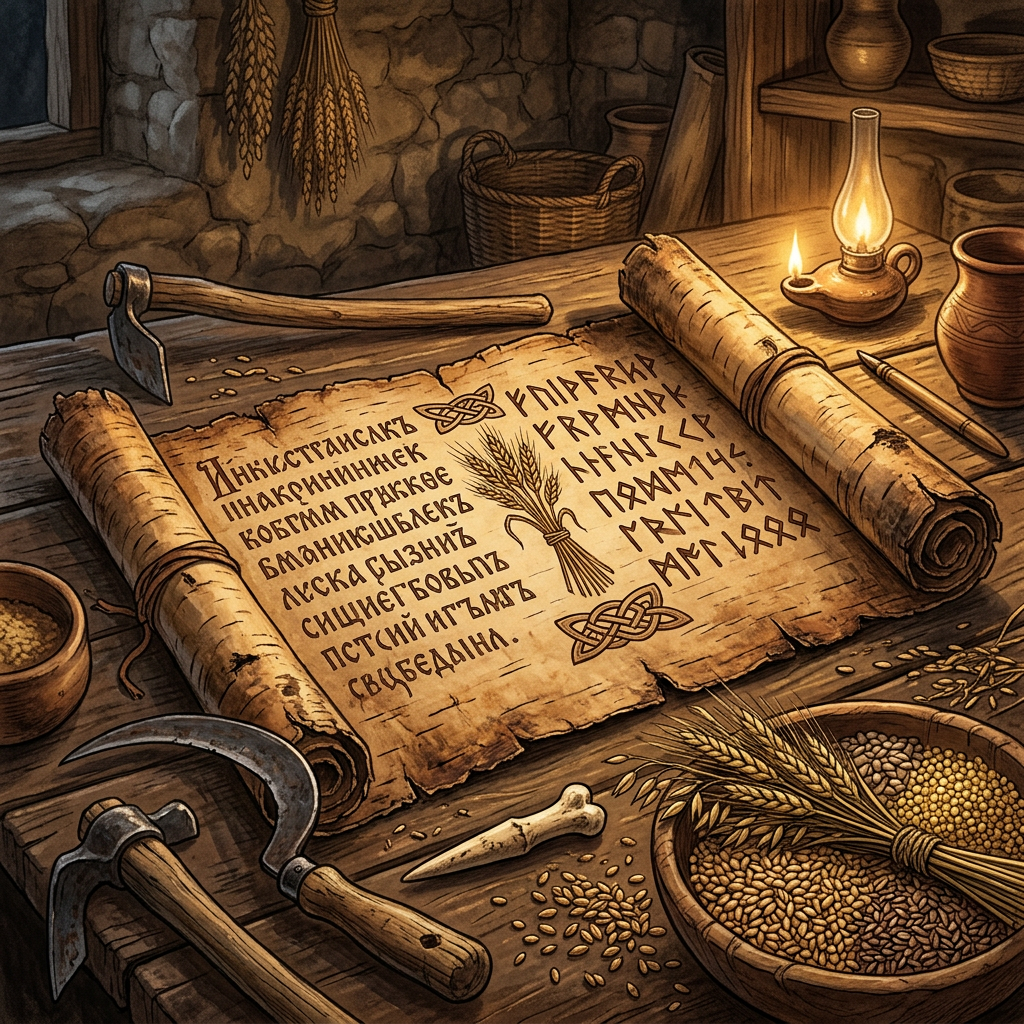
A collection of hybrid Sharada-Sogdian scrolls discovered in a remote cave in the Pamir Mountains has been deciphered using multispectral digital paleography. The manuscripts, dating to the late 8th century, contain an unprecedented level of detail regarding the breeding and preservation of stress-resilient seeds. The text outlines Sanskrit-derived protocols for soil salinity mitigation and the cross-breeding of high-altitude cereal varieties, indicating a sophisticated trans-Himalayan exchange of agricultural science.
According to the International Dunhuang Project, the scrolls demonstrate how ancient scientists in the Gandhara region collaborated with Sogdian merchants to adapt Indian crop systems to the harsh climates of Central Asia. The manuscripts describe the use of specific botanical extracts as natural pesticides, a method termed "Krimighna" in Vedic texts. This discovery marks the first time that a systematic manual of high-altitude agricultural technology has been recovered from the Silk Road, highlighting the role of Kashmiri Sharada scholars in regional food security.