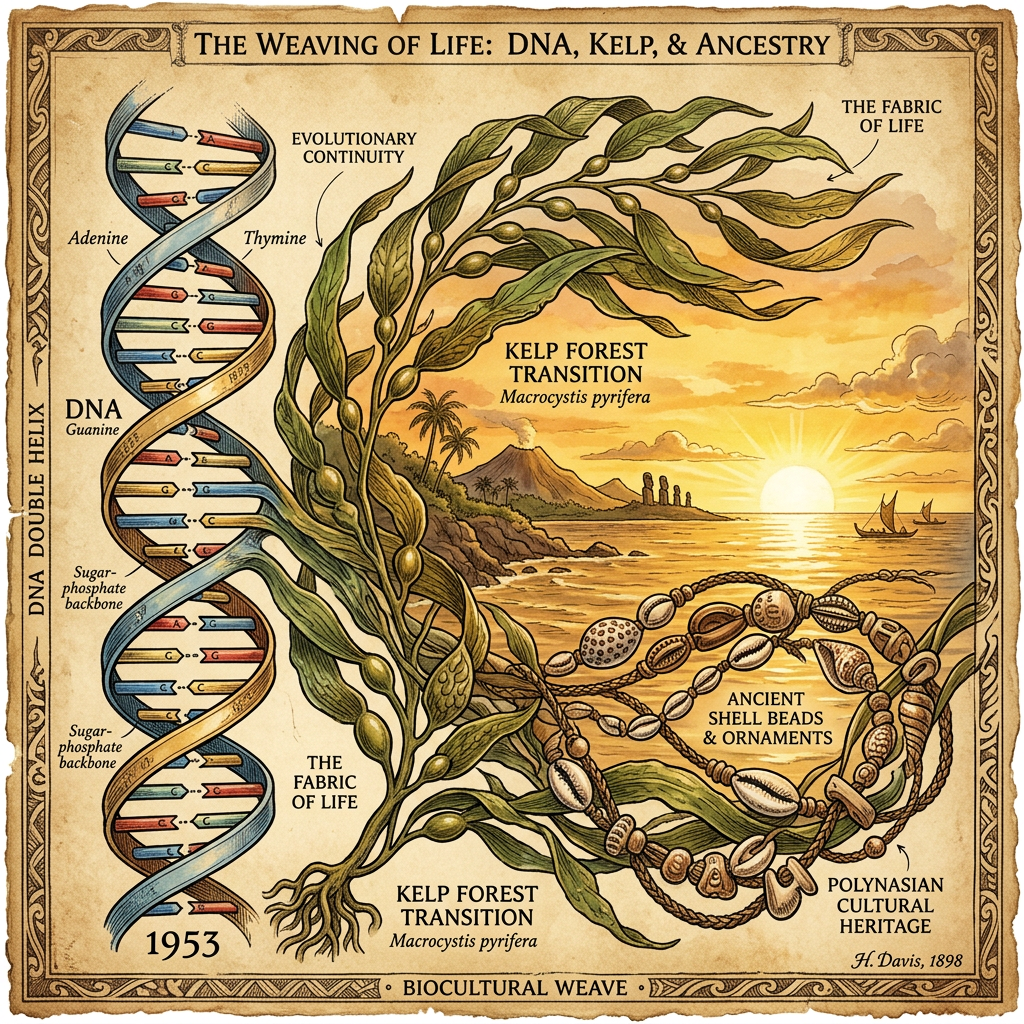
A large-scale paleogenomic study appearing in Science Advances has identified a previously unknown genetic signature in 9,000-year-old human remains found on the Channel Islands of California. The research reveals that these early maritime foragers possessed specific genetic adaptations for the metabolism of iodine and complex carbohydrates found in marine kelp, a trait distinct from their mainland contemporaries.
This anthropological breakthrough suggests that coastal populations developed highly specialized evolutionary paths much earlier than previously thought. The study also maps a unique migration pulse that likely bypassed mainland inland routes, emphasizing the importance of maritime corridors in the colonization of the Americas during the early Holocene.