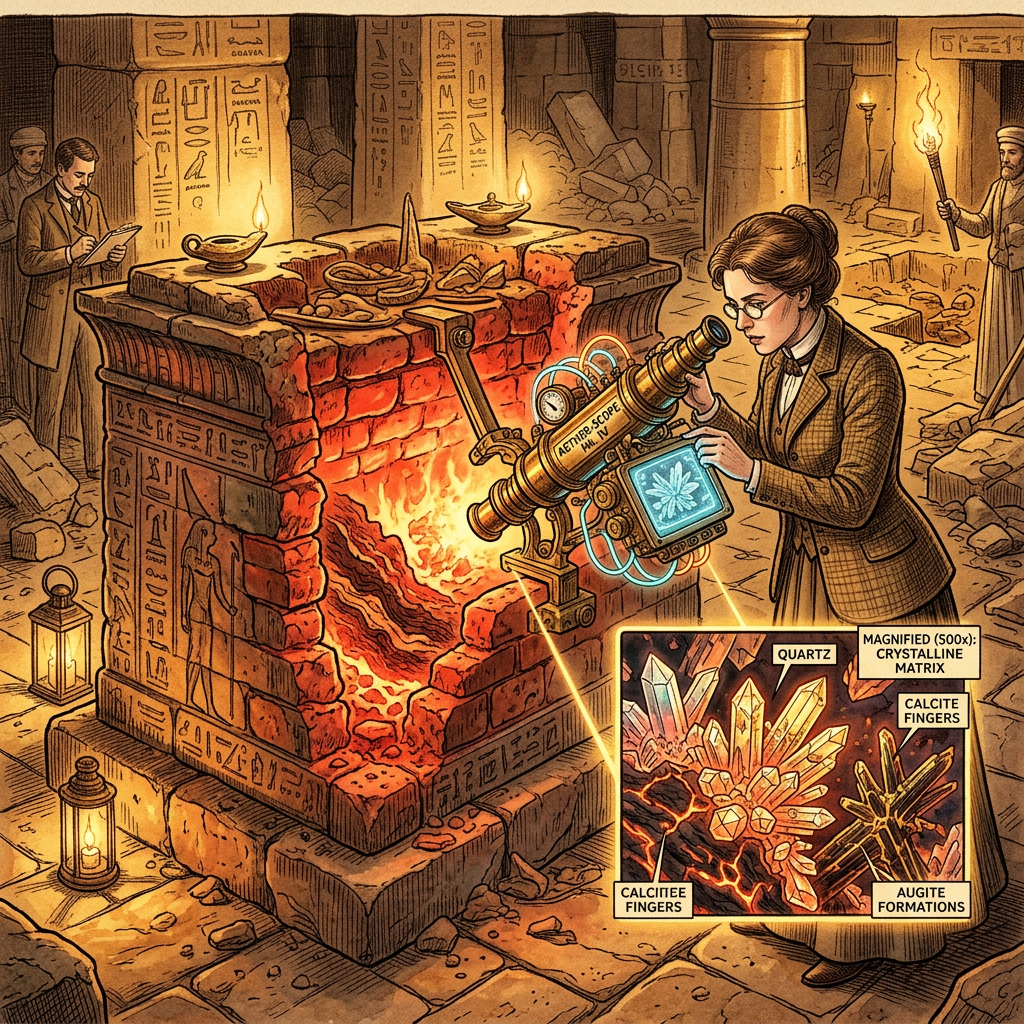
A materials science study published in Archaeometry has analyzed ceramic samples from 5th-century BCE ritual sites associated with the Shatapatha Brahmana. The research found that the bricks used for the construction of elaborate fire altars (Agni-Chayana) were made from specialized high-alumina clays that allowed them to withstand temperatures exceeding 1200°C without structural failure.
The chemical fingerprinting suggests that ancient artisans deliberately selected and processed minerals to create a refractory ceramic with low thermal expansion properties. This discovery indicates that the geometric precision of Vedic altars was matched by an equally advanced understanding of high-temperature metallurgy and materials engineering, long before such techniques were formalized in modern industrial chemistry.