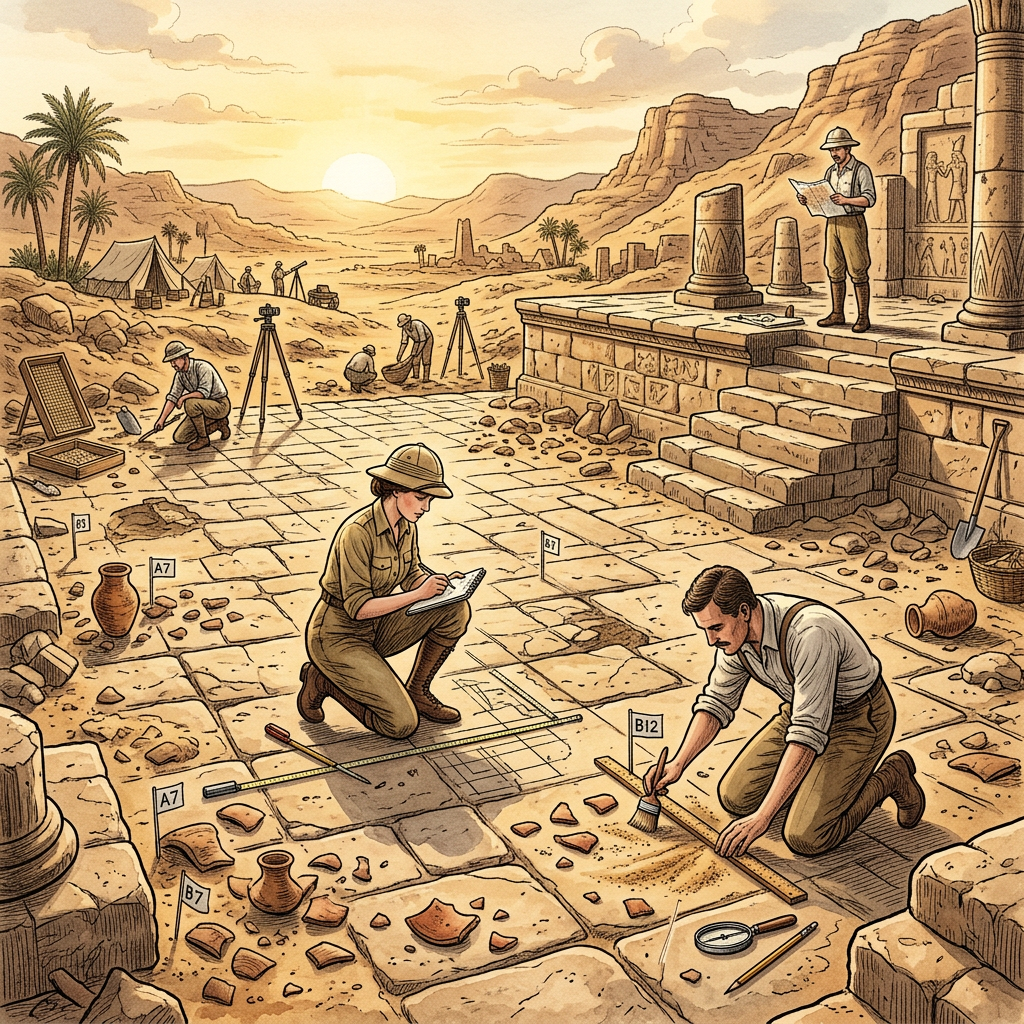
A joint international team of archaeologists has uncovered a massive open-air courtyard at the site of Tell Qubba, revealing evidence of large-scale communal banquets dating to 2,500 BCE. The presence of thousands of uniform clay beakers and charred remains of emmer wheat suggests the site was a central hub for the "Akitu-Sowing" festival, a precursor to the better-known Mesopotamian New Year celebrations.
The team also identified a specialized stone dais where ritual leaders likely performed the first symbolic furrowing of the earth. Chemical analysis of organic residues in the soil indicates the consumption of pomegranate-infused ale, a luxury beverage likely reserved for these high-status seasonal gatherings. This finding clarifies how early urban centers used religious festivals to coordinate agricultural labor across the Tigris valley.