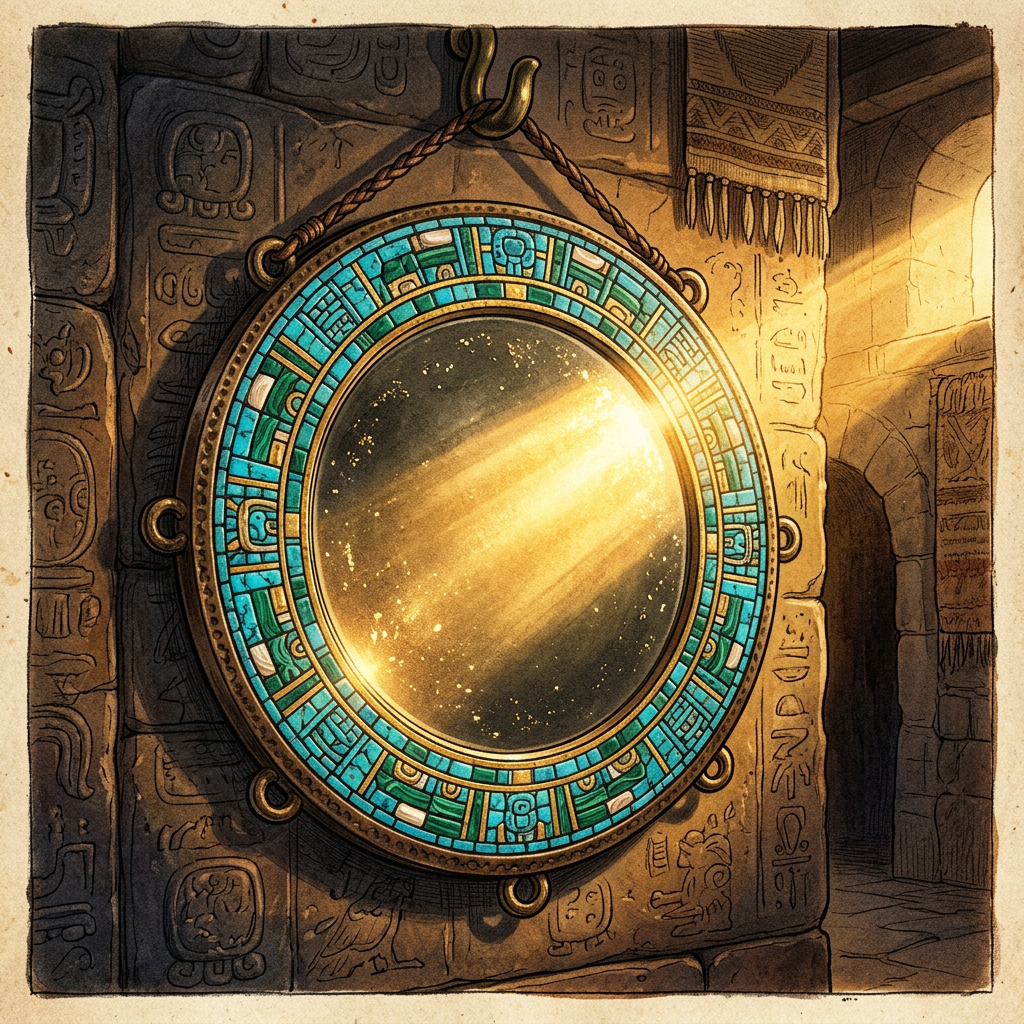
In a remote canyon within Chaco Culture National Historical Park, archaeologists have found a set of three pyrite mirrors framed in wood and encrusted with turquoise mosaic tiles. These mirrors were positioned to catch the first rays of the rising sun during the summer solstice, confirming their use in ancient "Sun-Greeting" festivals.
The orientation of the mirrors suggests they were used to reflect sunlight into the dark interiors of subterranean kivas, creating a dramatic celestial event for participants. This ritual practice likely served as a calendar marker for the community, signaling the start of the primary growing season and reinforcing the social bond through shared astronomical observation. The find highlights the sophisticated integration of light and architecture in Ancestral Puebloan ceremonial life.