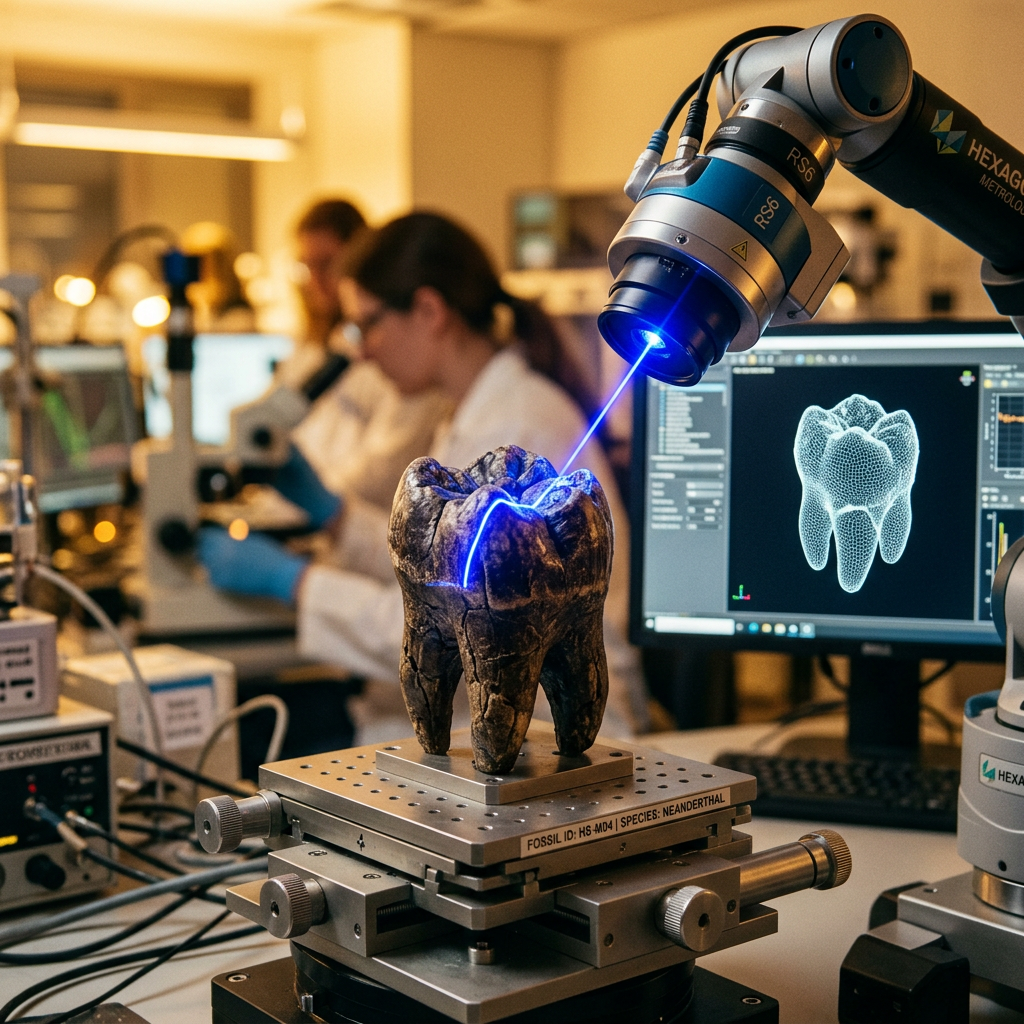
A groundbreaking proteomic study published in Nature Ecology & Evolution has successfully sequenced ancient proteins from 200,000-year-old hominin teeth discovered in India's Narmada Valley. This research identifies a unique Middle Pleistocene lineage that appears to be a distinct evolutionary precursor, potentially filling the phylogenetic gap between Homo erectus and later archaic hominins in South Asia.
By analyzing the amino acid sequences of dental enamel, the international research team determined that this population possessed specific protein markers for high-calcium metabolic efficiency, an adaptation likely necessitated by the mineral-rich but geographically constrained riverine environment of the period. This discovery challenges the linear model of human migration into India, suggesting a far more complex mosaic of hominin residency and adaptation in the subcontinent than previously hypothesized.