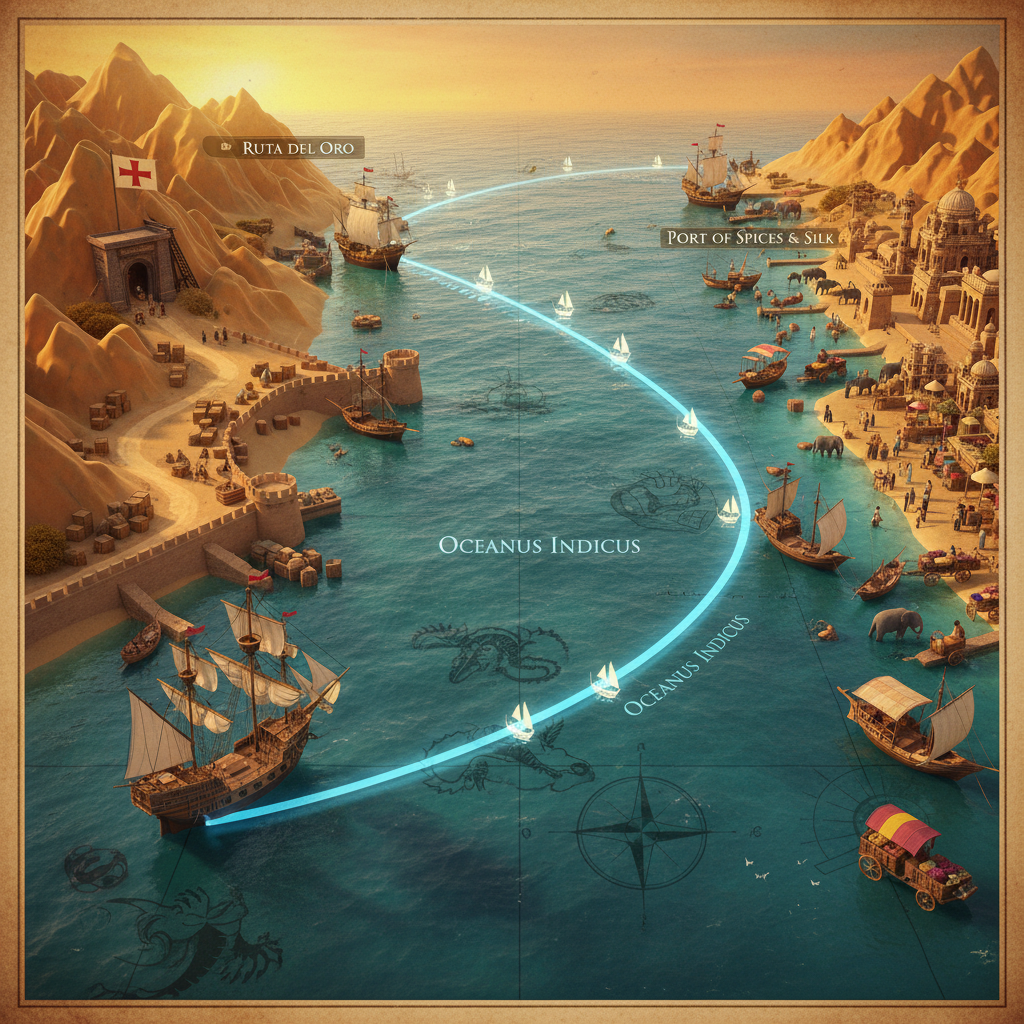
A new study of 1st-century BCE copper artifacts excavated from the ancient port of Bharuch in Gujarat has utilized lead isotope analysis to reveal a direct metallurgical link to the Rio Tinto mines in Roman-controlled Spain. The artifacts, including trade ingots and ritual vessels, show a chemical signature identical to ores found in the Iberian Peninsula, confirming the vast reach of the Maritime Silk Road.
Published in the International Journal of Nautical Archaeology, the research demonstrates that the Indo-Roman trade was not merely a luxury goods exchange but involved the movement of heavy industrial raw materials over 8,000 kilometers. This suggests that the ancient Indian port of Bharuch served as a critical global hub that integrated Mediterranean mineral resources into the broader South Asian economy nearly 2,000 years ago.