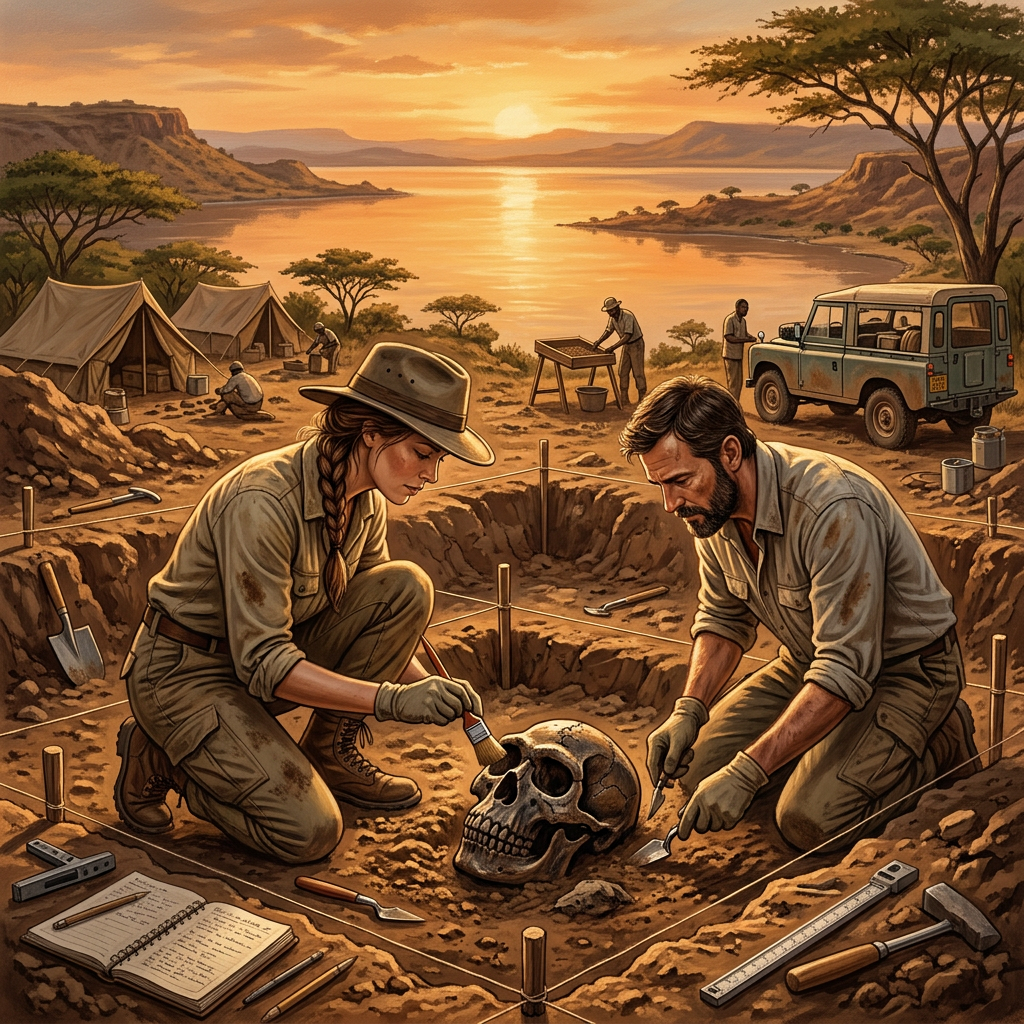
A breakthrough paleogenomic study published in Nature Genetics Research has successfully sequenced the DNA of skeletal remains found near Lake Manyara, Tanzania, dating back to the early Holocene. The research identifies a previously unknown genetic divergence that marks the transition of ancient foragers into the continent's first specialized pastoralist communities.
Using advanced high-coverage shotgun sequencing, the team discovered unique alleles associated with the early metabolism of dairy and resistance to zoonotic pathogens, predating previously established timelines by nearly 2,000 years. This genetic evidence suggests that the ancestral roots of East African herders were far more localized and ancient than the traditional 'migration-centric' models of agricultural dispersal had previously indicated.