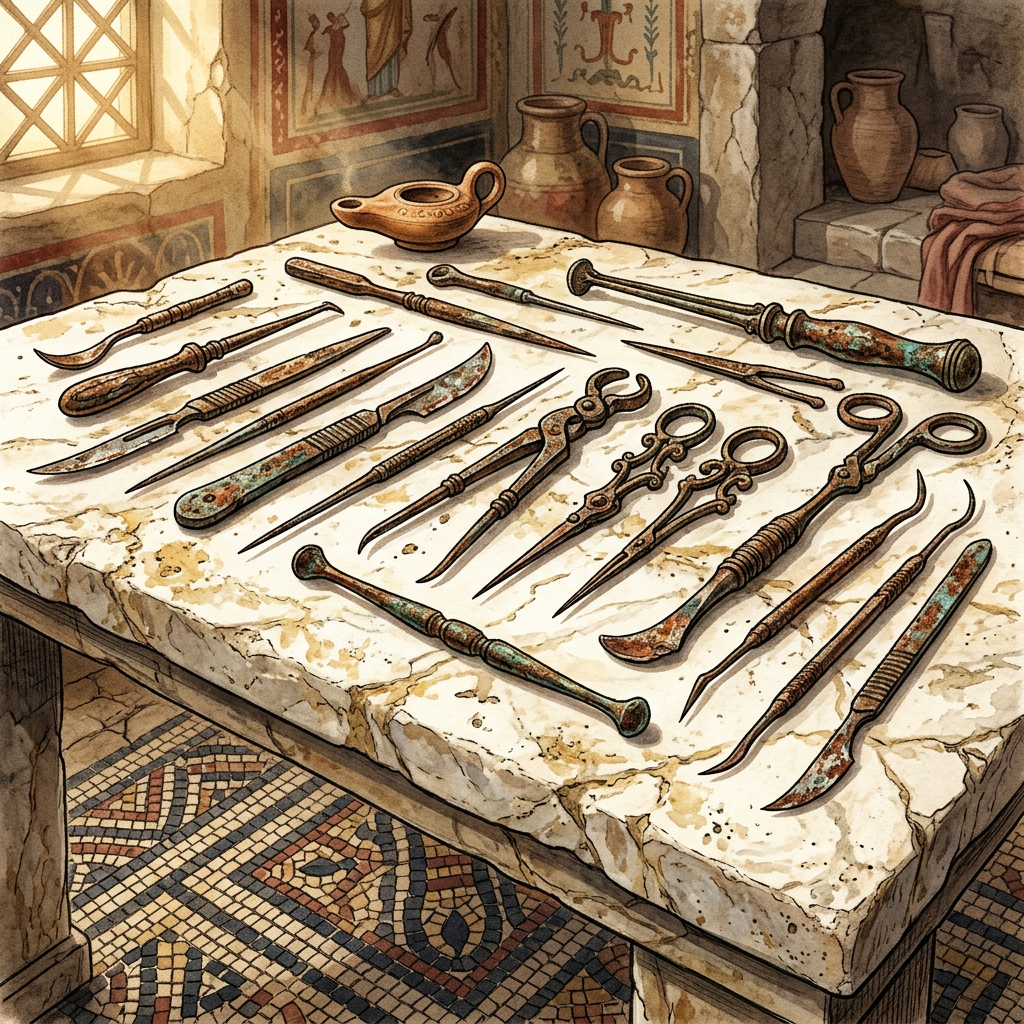
Excavations in the ancient Roman city of Italica, Spain, have led to the discovery of a specialized ophthalmologist's clinic dating to the 2nd century CE. The site yielded a remarkable collection of precision micro-surgical tools, including fine needles and scalpels used for cataract surgeries, which were documented in medical texts of the time but rarely found in situ.
The clinic features a small recovery room with intact floor mosaics depicting Asclepius, the god of medicine, and Hygeia. Analysis of residue in nearby ceramic jars has identified traces of herbal eye salves made from zinc and saffron, confirming the high level of specialized medical care available to the Roman elite in Hispania.