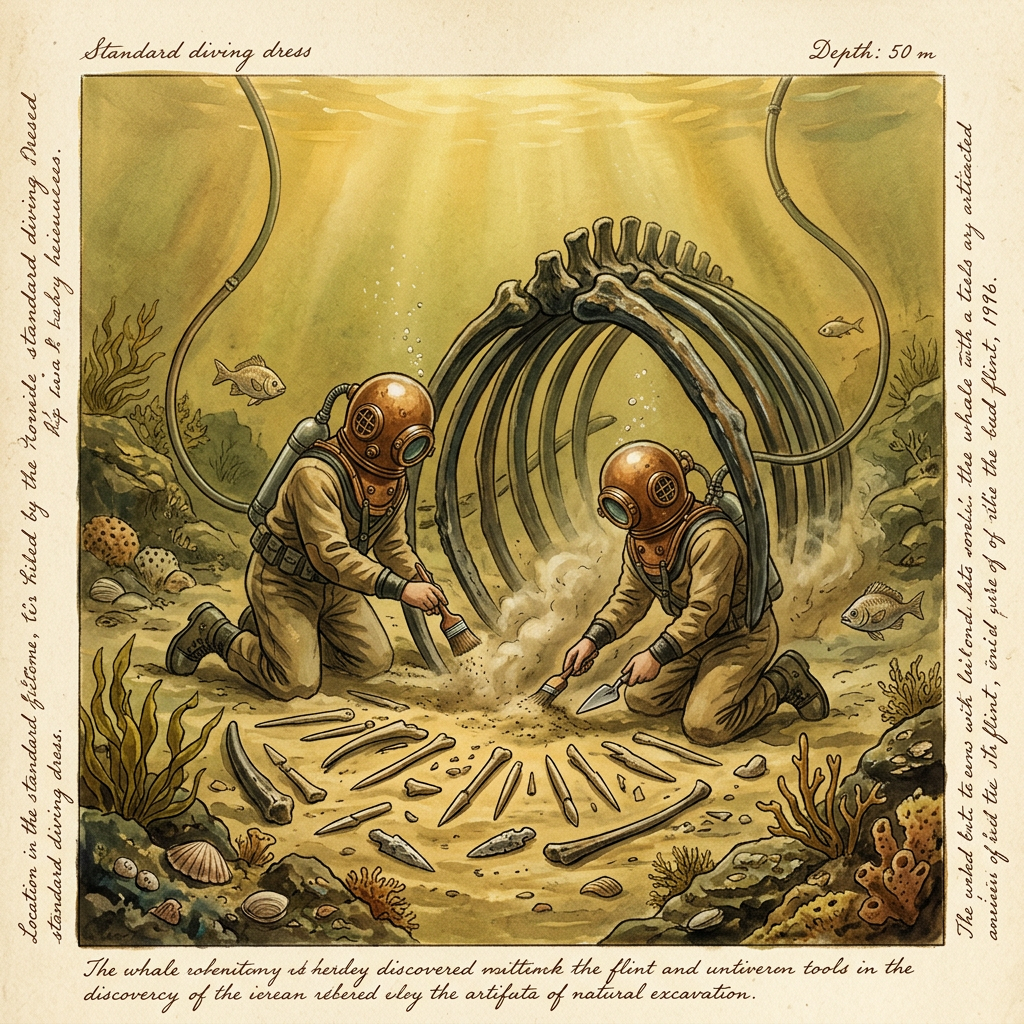
Marine archaeologists have discovered a submerged Neolithic whaling station off the coast of Norway, dating to approximately 6000 BCE. The site, preserved under layers of sediment since the post-glacial sea-level rise, contains extraordinary bone harpoons and stone knives still embedded in the skeletal remains of large cetaceans.
The findings suggest that early European coastal communities were much more technologically advanced in maritime hunting than previously thought. The site features a series of stone-weighted traps and processing areas, indicating a seasonal hub where meat and blubber were processed for long-term storage and trade across the Scandinavian region.