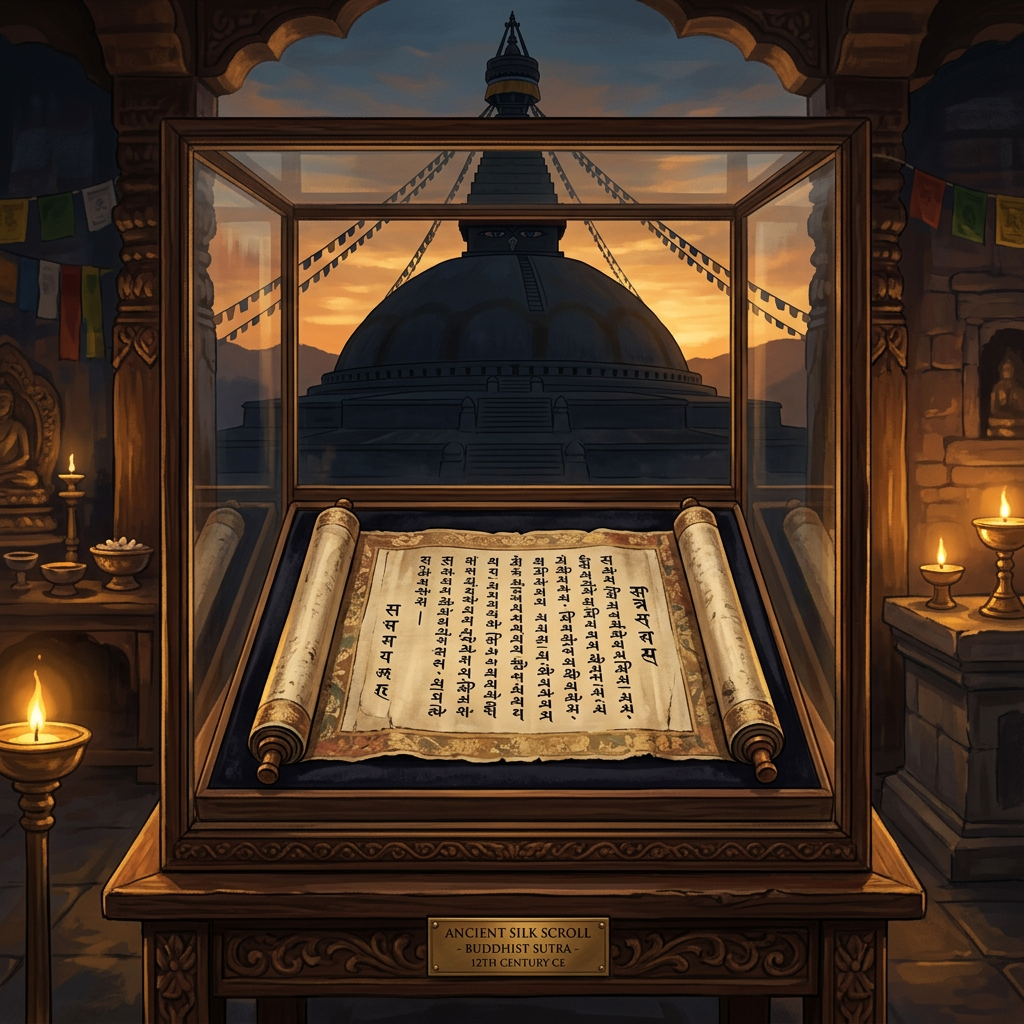
During restoration work near the Ajanta-Ellora complex in Aurangabad, workers discovered a small bronze cylinder containing a 7th-century silk-backed paper scroll. The text, identified as 'Advaita-Vritti', is a commentary on the nature of the ego, advocating for a radical 'Philosophy of Self-Effacement' (Aham-Nivritti) as the primary path to social and spiritual liberation.
Unlike the more famous intellectual Advaita of later centuries, this text focuses on the practicing of invisibility within the community. It posits that the highest form of virtue is to perform one's duty without leaving any 'trace' of the individual identity, thereby allowing the 'Universal Self' to act through the person. This find suggests a more ascetic and socially radical branch of early non-dualism in the Deccan region.