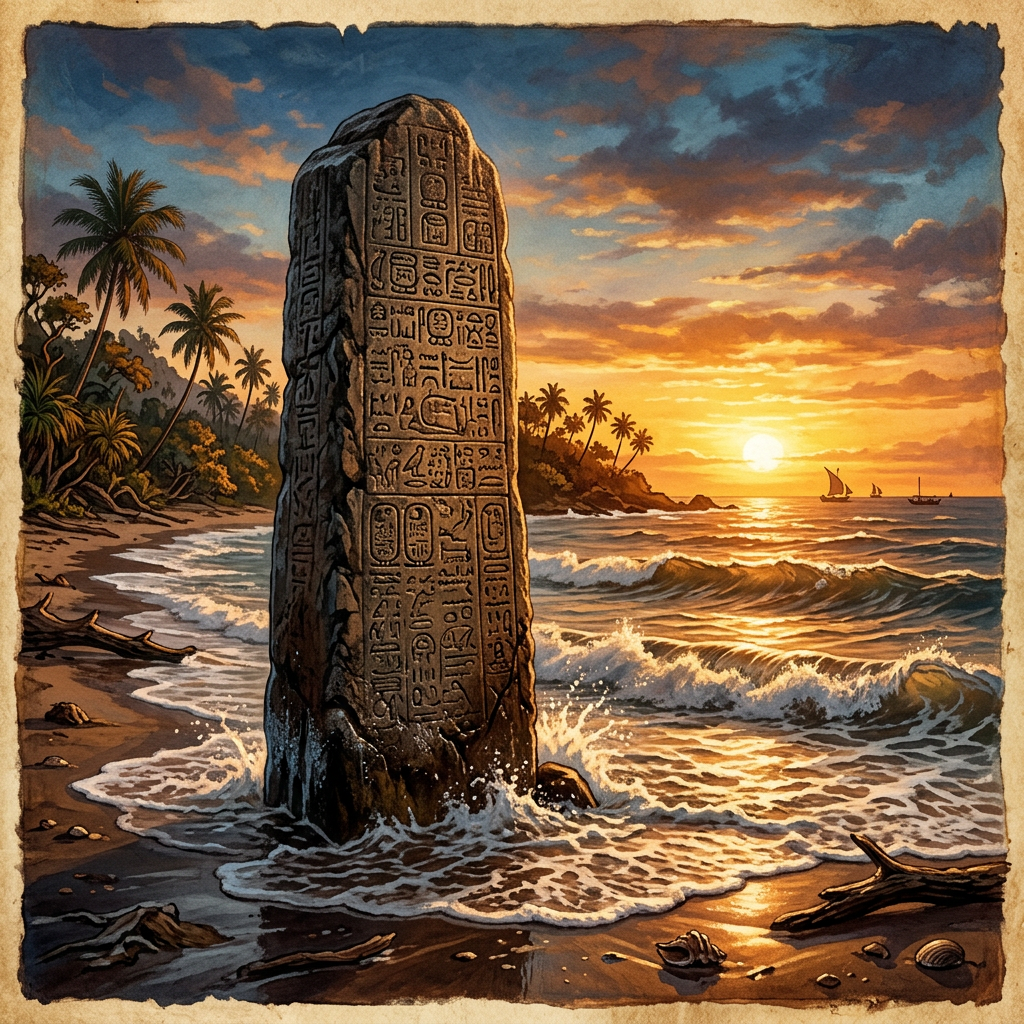
Maritime archaeologists working on the Gulf of Thailand coast have discovered a granite stela inscribed with a bilingual text in Sanskrit and a local Mon-Khmer dialect. Dated to the late 5th century, the inscription outlines a code of 'Maritime Dharma-Niti', providing ethical guidelines for international trade, shipwreck rescue, and the treatment of foreign sailors based on Vedic principles of hospitality and cosmic order.
The discovery confirms that Vedic philosophy was not merely a religious import to Southeast Asia but a practical ethical framework used to govern the complex, multicultural world of ancient maritime commerce. The text emphasizes that Rta (Cosmic Order) extends to the oceans, demanding that merchants act with 'Kshama' (forbearance) and 'Dayu' (mercy) during long voyages.