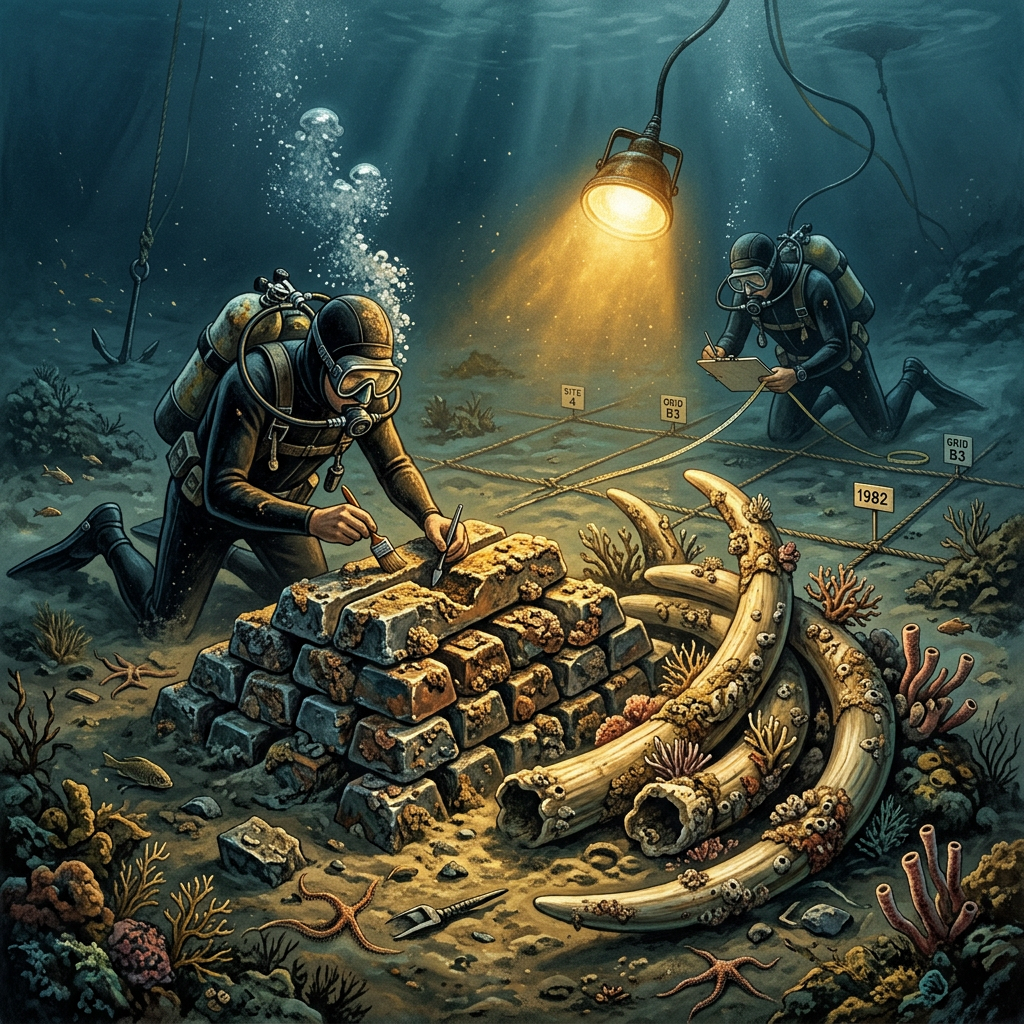
A breakthrough discovery off the coast of Senegal has provided physical evidence of a previously theoretical Phoenician maritime route. Marine archaeologists located a shipwreck containing a unique cargo of Mediterranean tin ingots alongside carved elephant tusks, suggesting a direct trade link between the Levant and West African kingdoms as early as 1000 BCE.
The wreckage, found at a depth of 45 meters, challenges the traditional view that Phoenician trade was largely confined to the Mediterranean and North Atlantic coasts. This "Tin and Tusk" route indicates a highly organized long-distance exchange network where raw metals were traded for high-value organic materials, reshaping our understanding of Iron Age global connectivity.