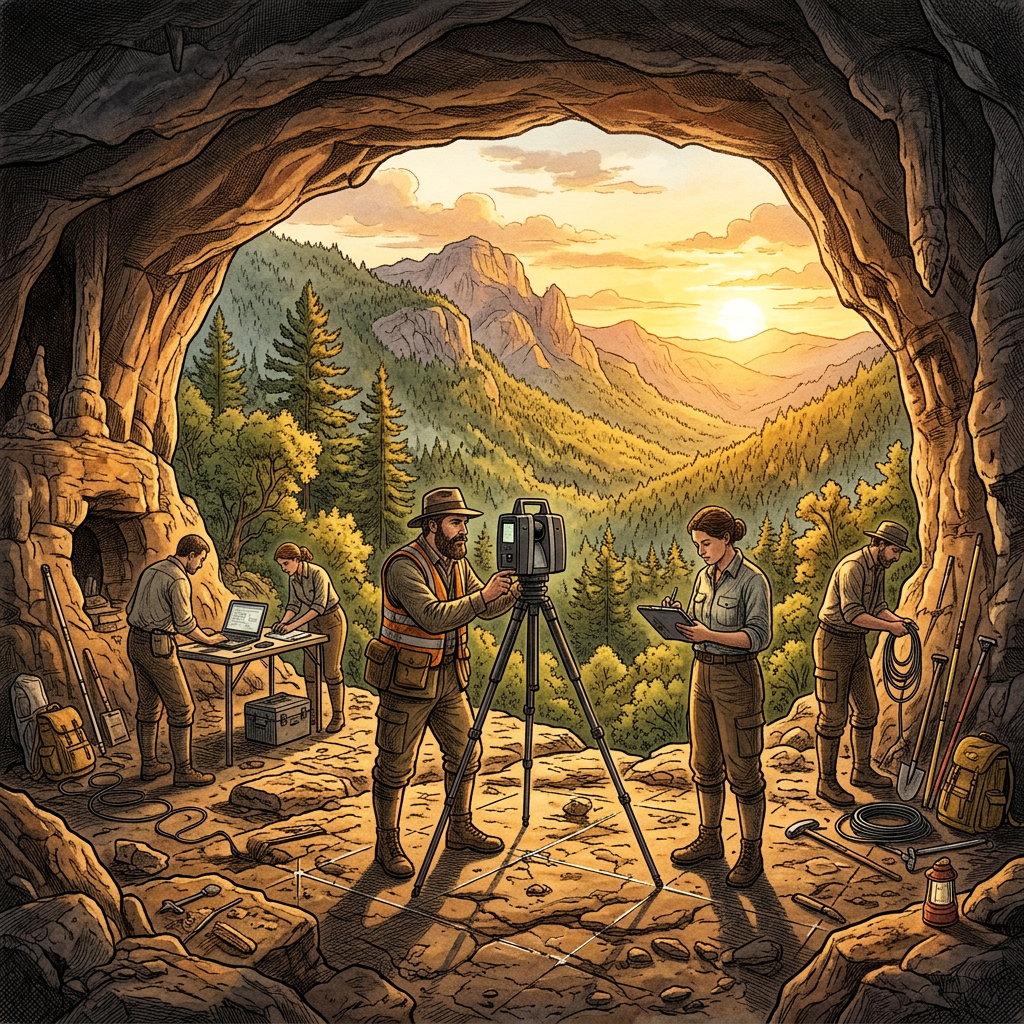
Archaeologists at the Deccan College Post-Graduate and Research Institute have announced a significant refinement in the dating of Paleolithic settlements in the Sahyadri Range of Western India. Using a novel 'Cosmogenic Magnesium-26' dating technique, researchers have pushed back the human occupation of these rock shelters to 70,000 years ago, coinciding with the early expansion of modern humans across the Indian subcontinent.
This new methodology measures the accumulation of stable isotopes in silicate minerals exposed to cosmic rays, allowing for much higher precision than traditional radiocarbon dating at these depths. The results suggest that these early inhabitants possessed advanced microlithic technology much earlier than suspected, adapting to the diverse ecological niches of the Western Ghats during the Late Pleistocene.