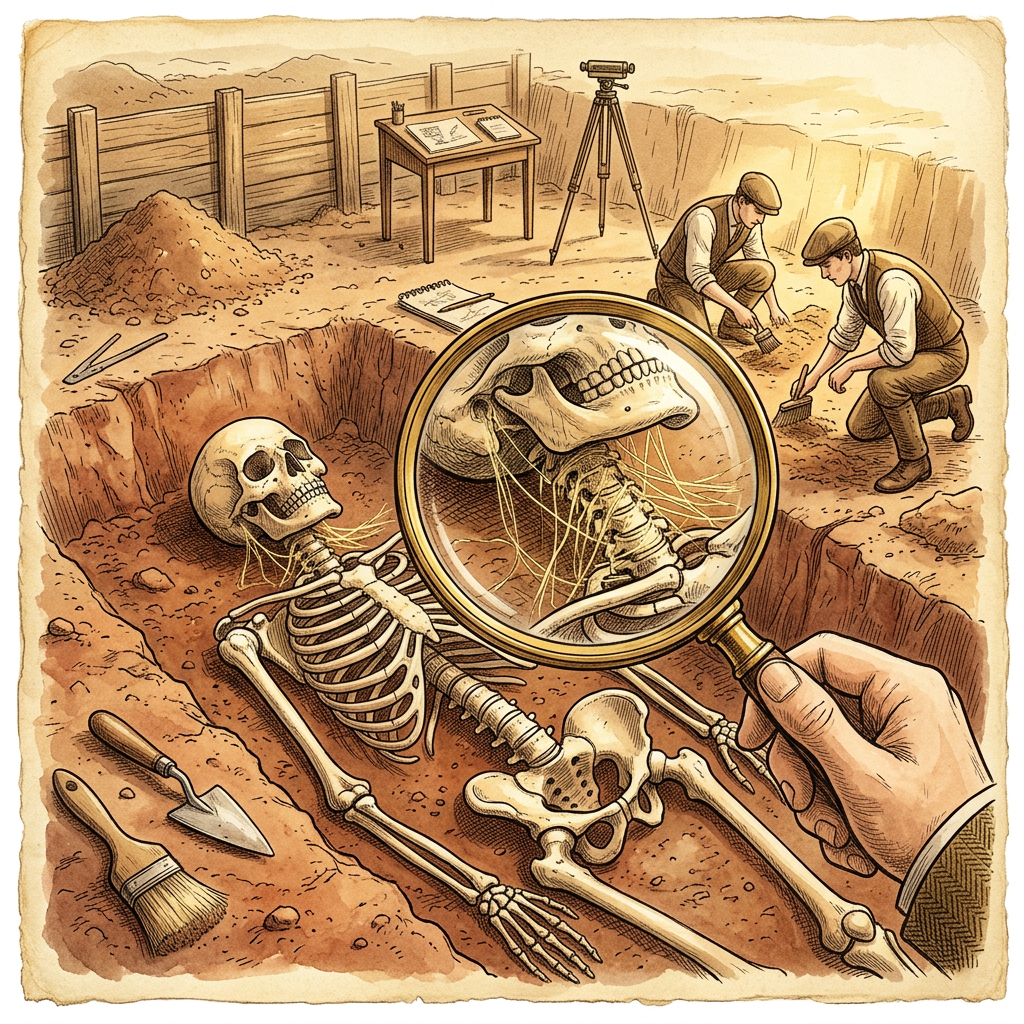
A large-scale genomic study published in Science Advances has analyzed the remains of a 5,500-year-old community from the Morgian culture in modern-day Turkmenistan. The research identified specific genetic clusters that suggest the existence of the world's earliest specialized silk-processing guilds. These individuals show unique occupational markers in their skeletal structure and isotopic signatures that correlate with long-term exposure to the chemical processes required for degumming wild silk fibers.
The paleogenomic data reveals that these ancient artisans formed a genetically distinct endogamous group, suggesting that specialized technical knowledge was passed down through specific family lineages for millennia. This study provides the first biological evidence of the social stratification of labor in the Eneolithic period, long before the formal establishment of the Silk Road.